 how-to
Signs of Foundation Water Damage: What to Look For
Table of Contents
- Visible Water, Pooling, and Dampness Around Your Foundation
- Cracks in Foundation Walls and Basement Floors
- Water Stains, Efflorescence, and Discoloration
- Mold, Mildew, and Musty Odors
- Warped, Buckling, and Uneven Floors
- Signs of a Foundation Leak and Water Under Your Foundation
- How Gutter Drainage Problems Lead to Foundation Damage
- How to Prevent Foundation Water Damage
- Frequently Asked Questions
Last Updated: October 9, 2026
Visible Water, Pooling, and Dampness Around Your Foundation
The most obvious sign of foundation water damage is standing water or visible moisture near your home's base. Water pooling against the foundation wall or seeping up through the basement floor means you have a water intrusion problem that needs attention right away.
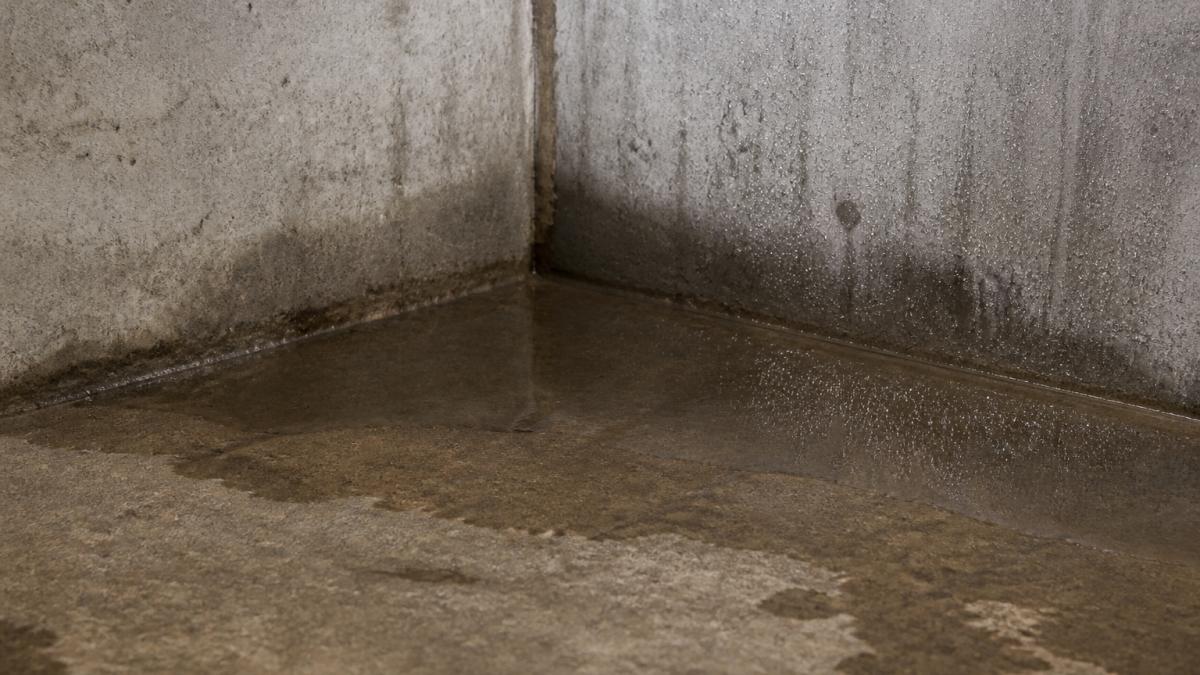
Dampness around your foundation isn't always dramatic. Sometimes it's a persistent wet feeling in the basement or crawl space, even with no visible standing water, the air feels heavy, and clothes and stored items feel damp. This is water intrusion happening slowly and steadily.
Common places where pooling occurs:
- Along the base of basement walls
- In corners where two walls meet
- Under window wells
- Along the perimeter where the foundation meets the floor
- In crawl spaces after heavy rain
At Hung Right Seamless Gutters, we've found that pooling water often traces back to one root cause: gutters that aren't draining water far enough from the house.
If you notice dampness after rain, check your gutters first. Overflowing gutters or sagging sections that trap water are fixable problems that prevent water from reaching your foundation in the first place.
Cracks in Foundation Walls and Basement Floors
Foundation cracks come in different types, and not all signal water damage. But certain cracks let water seep through, and some form because water pressure is pushing against your foundation from outside.
Hairline cracks are thin, barely visible lines in concrete. They're common and often harmless. But if water is actively seeping through them, they need attention.
Wider cracks (more than 1/8 inch) are more serious, water finds its way through them more easily. A crack wider than 1/4 inch is a structural concern beyond water damage prevention.
Horizontal cracks running across a foundation wall are especially worrisome. They suggest water pressure is pushing the wall inward, a sign of serious foundation water damage that needs professional evaluation.
Stair-step cracks that run diagonally are often caused by foundation settlement, but they can also let water enter. Cracks getting wider over time are a red flag.
Check your basement floor too. Cracks in concrete slabs often develop when water pressure builds up underneath.
The key question: Is water actually coming through the crack? If yes, you have a foundation water damage problem that needs fixing.
Water Stains, Efflorescence, and Discoloration
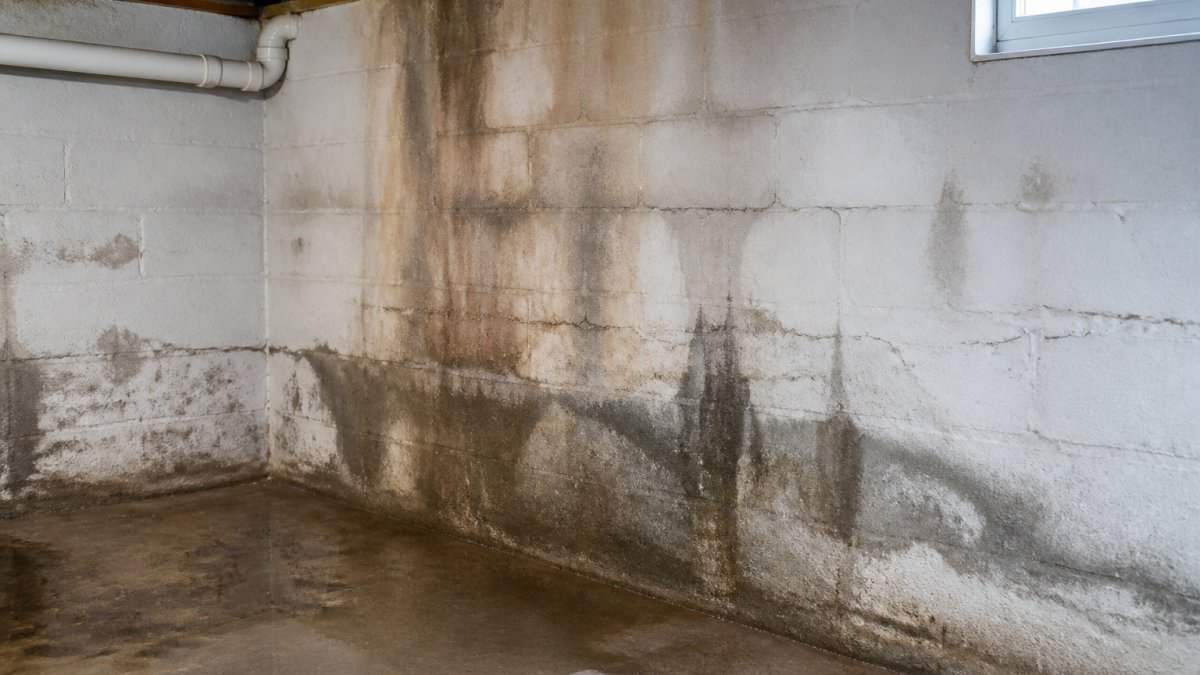
Water stains on basement walls are telltale signs of past or ongoing water intrusion. They appear as dark streaks or patches on concrete or masonry, sometimes forming a tide line that shows how high water rose during the last heavy rain.
Efflorescence is a white, chalky deposit that forms on concrete or brick when water carries mineral salts through the concrete and they crystallize on the surface as the water evaporates. It isn't dangerous, but it's a clear indicator that water is moving through your foundation.
Discoloration can also come from mold growth or mineral buildup. Dark, fuzzy staining rather than clean white deposits likely means mold, a separate but related problem.
These visual signs tell you water has been present at your foundation. Even if the wall feels dry now, the stains prove water intrusion has happened, your foundation's water barrier isn't working as it should.
Look for stains in these locations:
- Along the base of walls where they meet the floor
- Around basement windows and window wells
- Near cracks in the foundation
- In corners where two walls meet
- On the outside of the foundation if you can access it
Stains that appear after rain and fade as the basement dries are less urgent than stains that stay wet or return repeatedly. But any staining is worth investigating because it shows your foundation water damage risk is real.
Mold, Mildew, and Musty Odors
A musty smell in your basement is almost always a sign of moisture from mold and mildew growing in damp conditions. If it smells like wet earth or old socks, water is present, even if you can't see it.
Mold and mildew thrive in the humid environment created by foundation water damage (the CDC).
Mold isn't just a smell problem, it poses health risks, especially for people with allergies, asthma, or weakened immune systems. If you see mold, address the underlying moisture problem (the CDC).
The connection is direct: water intrusion creates humidity, humidity feeds mold growth, mold causes health and property damage. Fixing the water problem stops the mold from coming back.
Common places where mold appears:
- On basement walls and corners
- Around window wells
- Under carpeting or flooring
- Inside wall cavities (you won't see this until walls are opened)
- On stored boxes or furniture
- Around HVAC ducts and ductwork
If you smell mustiness but see no mold, moisture is still present. You might have high humidity (above 60 percent), wet insulation in walls, damp soil around the foundation, or water trapped in crawl spaces.
Getting your gutters and drainage working properly stops the moisture at the source. That's far cheaper and easier than dealing with mold removal later.
Warped, Buckling, and Uneven Floors
Basement and crawl space floors that are uneven, buckled, or warped are often caused by water damage and moisture. When water soaks into wood subfloors or shifts concrete, the floor surface becomes uneven.
Buckling floors happen when wood absorbs moisture and swells, creating humps and waves in the floor surface. This is common in basements with chronic moisture problems.
Uneven concrete floors can develop from water pressure pushing the slab up, or from settling caused by water eroding the soil supporting the foundation. If one section is higher or lower than before, water damage or foundation movement is likely involved.
Warped subflooring under carpeting or laminate is often hidden until damage is severe. A soft or spongy basement floor means the subfloor is absorbing water.
These floor problems are expensive to fix because they often require replacing the subfloor or releveling concrete, and they indicate water has been present long enough to cause structural damage. Catching water intrusion early is critical.
If your basement floor is uneven or soft:
- Stop using the space for storage of valuables
- Plan to address the water problem immediately
- Get a professional evaluation of the structural damage
- Consider temporary moisture control while repairs are planned
Signs of a Foundation Leak and Water Under Your Foundation
A foundation leak is water coming through the foundation itself, cracks, pores in concrete, or gaps where pipes or utilities enter the home, rather than pooling against the outside.
Water under your foundation (groundwater or subsurface water) is often the source of foundation leaks. This pressure builds up around your home and pushes through the foundation from the outside in.
Signs you have a foundation leak:
- Water appearing on basement walls or floors during or after rain
- Damp patches that appear in the same spot repeatedly
- Water seeping from where pipes enter the foundation
- Wet soil or standing water on the exterior foundation
- Cracks with water actively flowing through them
The difference between a small leak and a serious one matters. A slow seep after heavy rain might be manageable short-term; water flowing steadily into your basement is an emergency.
To identify the source of a foundation leak, watch where the water appears. Does it come from a specific crack, along the entire perimeter, during rain or dry spells? The pattern tells you whether the problem is surface water (which gutters can help prevent) or groundwater (which requires drainage solutions).
How Gutter Drainage Problems Lead to Foundation Damage
This is the connection most homeowners miss: your gutters are your foundation's first line of defense.
When gutters work, they catch rain from your roof and direct it away from your home's base.
Sagging gutters trap water instead of flowing it away, so it overflows and pours down the outside of your foundation wall.
Leaking seams in sectional gutters let water escape before it reaches the downspout, running down the side of your house and collecting at the foundation.
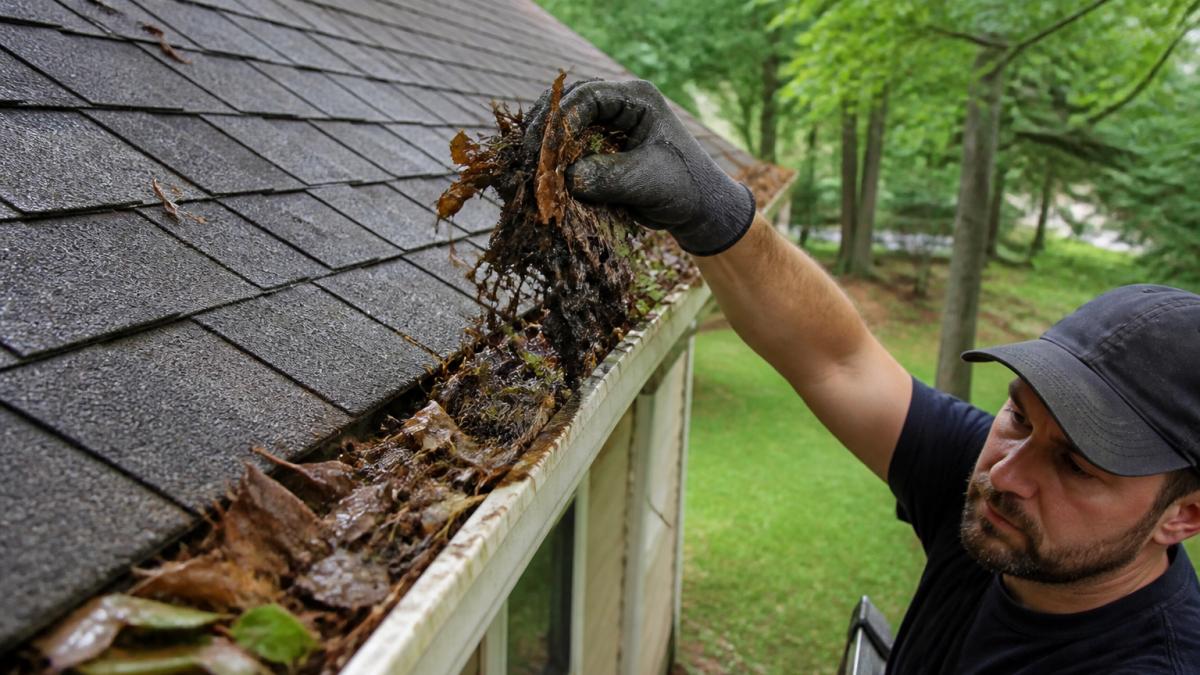
Clogged gutters overflow during rain. Leaves, debris, and sediment block the flow. Water backs up and spills over the edge, pooling against your foundation.
Short or missing downspout extensions direct water too close to the house. Downspouts should extend at least 4-6 feet away; water dumping at the base soaks into the soil and pressurizes your foundation.
Improper gutter slope means water doesn't flow toward the downspout, pooling in the gutter or spilling over the low side.
All of these gutter problems are preventable.
At Hung Right Seamless Gutters, we've seen countless cases where foundation water damage started with gutter failure. The good news: fixing your gutters often stops the water problem before it becomes expensive foundation damage.
How to Prevent Foundation Water Damage
Prevention is always cheaper than repair. Here's how to protect your foundation.
Keep gutters clean and flowing. This is the single most important step. Clean gutters after leaves fall and after storms, check that water flows freely through downspouts, and make sure any leaf guard system is functioning.
Extend downspouts away from the foundation. Water should discharge at least 4-6 feet away.
Ensure proper grading around your home. Soil should slope away from the foundation so water runs away from your house, not toward it.
Seal cracks in your foundation. Small cracks can be sealed with concrete crack filler. Larger cracks need professional evaluation and repair.
Monitor your basement regularly. After heavy rain, check for new stains, dampness, or water. Catching problems early prevents serious damage.
Consider a dehumidifier. If humidity is high but there's no standing water, a dehumidifier removes excess moisture and prevents mold growth.
Inspect your foundation annually. Walk around outside looking for water pooling, cracks, or erosion, and check inside for stains or dampness.
The best prevention starts with your gutters.
Foundation water damage doesn't happen overnight, but it progresses quickly once it starts.
Most of these problems trace back to gutters that aren't doing their job.
If you're seeing signs of foundation water damage, or want to prevent it before it starts, schedule a free evaluation with us.
| Sign | What It Means | Action to Take |
|---|---|---|
| Standing water or dampness | Water is pooling at your foundation | Check gutters; extend downspouts away from house |
| Foundation cracks | Water may be entering through concrete | Seal small cracks; get professional evaluation for large ones |
| Water stains or efflorescence | Water has moved through foundation | Address the moisture source; check gutters and grading |
| Musty odor or mold | Excess moisture is present | Fix water intrusion; use dehumidifier; address mold growth |
| Uneven or buckling floors | Water damage to subfloor or concrete | Stop water intrusion immediately; plan floor repairs |
| Visible water seeping in | Active foundation leak | Emergency situation; get professional help now |
Frequently Asked Questions
What are the first signs of foundation water damage I should watch for?
The earliest signs include visible dampness on basement walls or floors, water pooling in corners, and a musty odor. You may also notice efflorescence (white mineral deposits) on concrete surfaces or peeling paint on foundation walls. Regular inspection of your basement and crawl space helps catch water intrusion before it causes structural damage. Pay special attention to areas near where gutters direct water away from your home.
Can clogged gutters cause foundation water damage?
Yes. When gutters clog with debris, water overflows instead of flowing through downspouts away from your foundation. This causes water to pool against foundation walls and seep into basements and crawl spaces. Over time, this constant moisture exposure leads to cracks, efflorescence, mold growth, and structural damage. Keeping gutters clean and ensuring downspouts direct water at least 4-6 feet from your foundation is critical for prevention.
How can I tell if water is getting under my foundation?
Signs include standing water or dampness on your basement floor, cracks in the concrete slab, efflorescence (white crusty deposits), and a persistent musty smell. You may also notice water stains on walls or uneven, buckling floors. If you suspect water under your foundation, check your water bill for unexpected increases, which can indicate a plumbing leak. A moisture meter can help confirm elevated humidity levels in affected areas.
What's the difference between a foundation leak and other foundation problems?
A foundation leak is caused by water intrusion and shows signs like dampness, efflorescence, mold, and water stains. Other foundation problems such as settling or structural movement may cause cracks and uneven floors but without moisture or musty odors. Water-related damage typically appears near ground level and is accompanied by visible water or moisture. If you're unsure, a professional inspection can distinguish between water damage and other foundation issues.