 blog
blog
Best Gutter Protection for Homes: 2026 Buyer's Guide
Table of Contents
- Why the Best Gutter Protection for Homes Starts With Your Roof
- Do Gutter Guards Really Work?
- Gutter Guard Types: Mesh, Screen, Foam, and Brush
- Gutter Guard Cost: What Homeowners Actually Pay
- Gutter Maintenance With Guards: What Still Needs Doing
- Climate and Debris: Choosing Protection for East Texas Rain
- DIY vs. Professional Installation: What the Warranty Says
- Conclusion
- Frequently Asked Questions
Last Updated: October 7, 2026
Why the Best Gutter Protection for Homes Starts With Your Roof
The best gutter protection for homes starts at the roof edge, not the gutter trough. Water sheets off the roof, hits the drip edge, and drops into the channel below.
We have spent 25 years watching homeowners buy guards to fix a problem that was never about the guard. Overflow usually traces back to three things: a gutter pitched the wrong way, a rotting fascia board, or a downspout that cannot keep up with the roof's runoff.
Fix those first. Then add protection.
Do Gutter Guards Really Work?
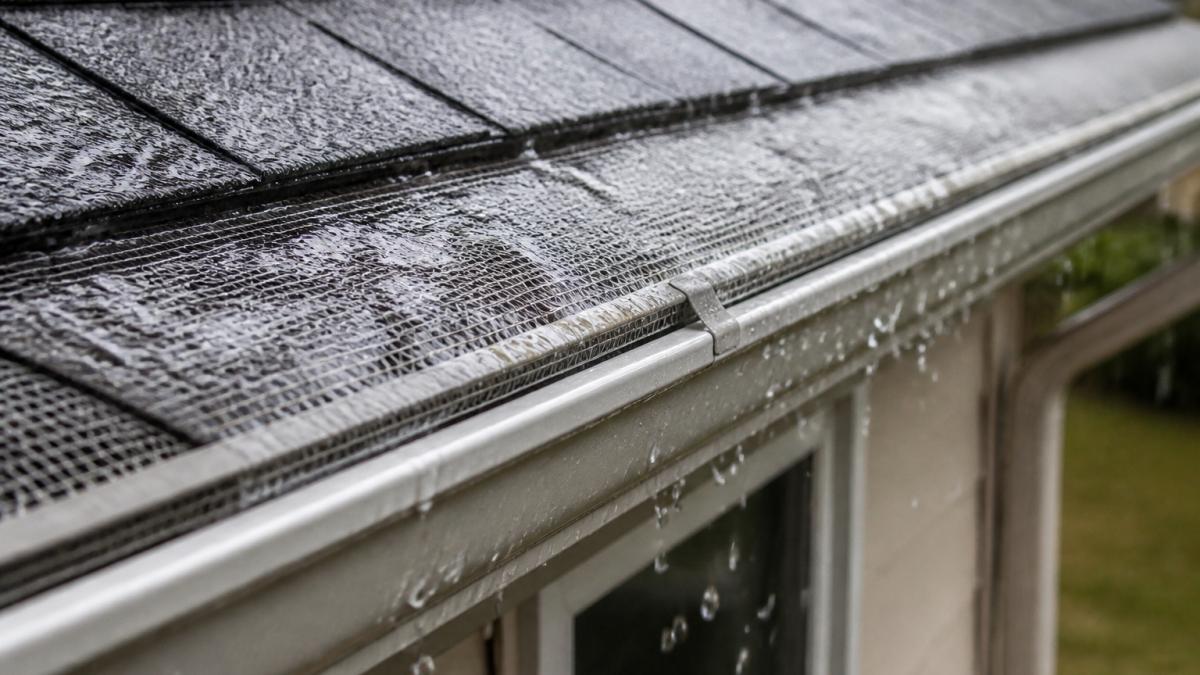
Yes, gutter guards work, but only against the debris they were designed to stop. A guard is a filter, and every filter has a mesh size. Fine mesh blocks pine needles and shingle grit; coarse screens let those through.
The honest answer: guards cut cleaning frequency, they do not eliminate cleaning. This Old House guide to gutter guards makes the same point, and it matches what we see on service calls across East Texas.
Gutter Guard Types: Mesh, Screen, Foam, and Brush
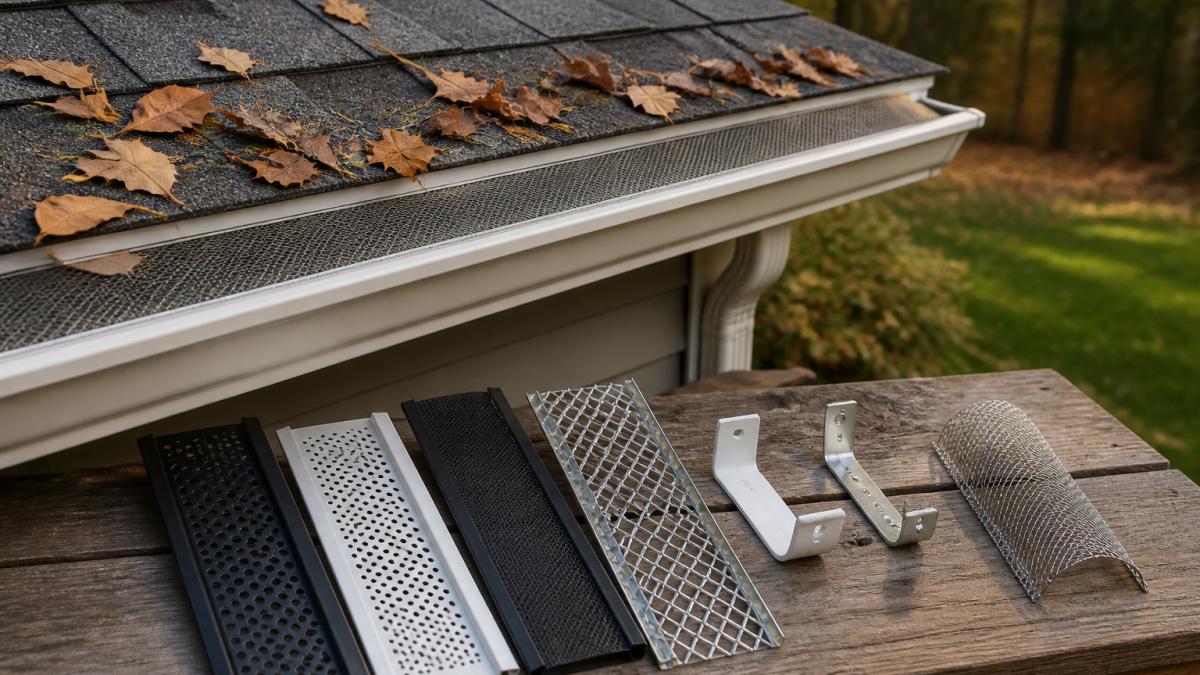
Four guard types cover almost every home, and the differences come down to mesh size, material, and surface tension.
| Guard Type | Blocks | Best For | Weakness |
|---|---|---|---|
| Micro-mesh | Pine needles, grit, pollen | Heavy tree cover | Higher cost |
| Aluminum mesh | Leaves, large debris | Most homes | Small seeds slip through |
| Screen | Leaves only | Light debris | Clogs with needles |
| Foam / brush | Large leaves | Low debris, budget | Traps grit, hard to clean |
Micro-Mesh and Aluminum Mesh Guards
Micro-mesh and aluminum mesh guards are the two strongest choices for most homes. Micro-mesh uses a stainless steel screen bonded to an aluminum frame, with openings small enough to block pine needles and alder pollen while surface tension pulls water through. Aluminum mesh filters less but costs less and resists corrosion.
Both rely on solid installation hardware. A mesh panel that lifts in a storm is worse than no guard at all.
Screen, Foam, and Brush Guards
Screen, foam, and brush guards are the budget tier. Screens handle leaves but let needles and grit through, so debris accumulates underneath. Foam inserts block large leaves but trap moisture and fine dirt; brush guards work the same way, and both are awkward to clean once full.
If your roof is under heavy pine cover, skip this tier. You will be pulling the inserts out within a season.
Gutter Guard Cost: What Homeowners Actually Pay
Gutter guard cost depends on the guard type, the linear footage of your roofline, and whether the job needs repairs first. We do not publish flat rates because two homes on the same street can need very different work.
What we can tell you is where the money goes: a large share of any professional quote is labor and prep, not the guard itself.
What Drives the Price Up or Down
Five variables move a gutter guard quote more than anything else:
- Linear footage. A typical single-story home runs 150 to 200 feet of gutter; a two-story with a complex roofline can run 300 feet or more. Material is priced per foot, so footage is the biggest multiplier.
- Guard type. Foam and brush inserts are cheapest per foot, snap-in screens sit in the middle, and micro-mesh with a stainless steel screen bonded to an aluminum frame is the most expensive, since the material costs more and panels are cut and fastened individually.
- Roof pitch and stories. Steep pitches and second-story runs slow the crew and require more fall protection. Labor is billed by time, so access difficulty shows up in the quote.
- Roofline complexity. Valleys, dormers, corners, and multiple downspouts add cut-and-fit time. A simple gable roof is the cheapest shape to guard.
- Prep work. Re-pitching a sagging gutter, replacing rotted fascia, or adding hangers is repair work, not guard work. It happens first and is often the largest line item.
The 10-Year Math: Cleaning vs. Guard Replacement
Most guides stop at the installation quote. The number that matters is what you spend over a decade. Here is a framework to consider, using your own numbers:
- Baseline cleaning cost. Count how many times a year your gutters need clearing without guards, multiply by a typical per-visit rate in your market, then by 10. That is your no-guard 10-year cost.
- Guarded cleaning cost. With guards, most homes drop to one or two surface checks a year. Multiply that reduced frequency by the same rate.
- Guard install cost. Add the one-time professional quote, including any prep repairs.
- Replacement horizon. Foam and brush inserts typically need replacing well before a decade. Screens and aluminum mesh last longer but can deform or pull loose. Properly fastened micro-mesh panels last longest.
- Repair risk. Add a line for the odds of a DIY install that lifts in a storm, voids a roof warranty, or forces a re-do. That risk is not free.
The pattern most homeowners find: on a heavily treed lot with three or four cleanings a year, professional micro-mesh can pay back inside the decade. On a lightly treed lot with one cleaning a year, the math is closer, and a DIY aluminum mesh install can win. Run your numbers before you sign.
For current pricing on your home, schedule a free evaluation and we will measure your roofline and give you a straight number with no corporate markup.
Gutter Maintenance With Guards: What Still Needs Doing
Gutter maintenance with guards is lighter, not zero. Plan on two checks a year, in spring and late fall. Clear the mesh surface of leaves and seed pods, flush the downspouts, and look for sagging sections after heavy storms.
Here is a routine to consider:
- Rinse the guard surface with a hose in spring
- Clear roof valleys and the first few feet of gutter after leaf drop
- Flush each downspout and check for downspout blockage
- Check hangers and fascia for movement or rot
- Inspect seams and corners for leaks after a hard rain
That is roughly an hour of work twice a year for most single-story homes. Without guards, the same home needs cleaning three to four times a season, often on a ladder at the roof edge.
Climate and Debris: Choosing Protection for East Texas Rain
East Texas rain comes hard and fast, and the debris load changes with the trees around you. Pine needles, alder pollen, and shingle grit are the three biggest cloggers here.
That is why micro-mesh is often recommended over screens for local homeowners. The EPA guidance on managing stormwater runoff at home is worth a read if you want to understand why keeping water moving away from your foundation matters.
A Climate-and-Debris Matrix You Can Actually Use
Most gutter guard guides give one generic recommendation, but the right guard depends on what falls on your roof and what the weather does to it. Use this matrix to match your conditions to a guard type:
| Your Conditions | Main Clogger | Guard to Prioritize | Why |
|---|---|---|---|
| Heavy pine or evergreen cover | Needles, pollen | Micro-mesh | Needles knit into mats; only a fine opening blocks them |
| Heavy hardwood cover, large leaves | Leaves, seed pods | Aluminum mesh | Big debris sheds off; finer mesh is overkill |
| Heavy snow and ice load | Ice dams, freeze-thaw grit | Aluminum mesh, open profile | Foam and brush trap moisture and can worsen ice buildup |
| High pollen season | Fine pollen, grit | Micro-mesh | Coarse screens let pollen through and it cakes |
| Heavy rainfall, short intense storms | Volume, shingle grit | Micro-mesh or aluminum mesh | Both move high water volume; screens can sheet over |
| Light debris, budget focus | Occasional leaves | Screen or foam | Cheapest option when clogging risk is low |
| Mixed cover, four seasons | Everything | Micro-mesh | Broadest filtration across changing debris |
How to Read Your Own Roof
Before you pick a guard, answer four questions:
- What is directly above the gutter? Stand at the downspout and look up. The tree species over the roofline decides your debris type more than anything else.
- How steep is the pitch? Steep roofs shed water and debris faster, which favors open profiles. Low-slope roofs hold debris longer, which favors finer mesh.
- How much snow and ice do you get? In freeze-thaw climates, inserts that hold moisture are a liability. Open mesh profiles drain and dry faster.
- How intense is your rain? In short, high-volume storms, the guard has to pass a lot of water in a hurry. Micro-mesh and aluminum mesh both handle this; solid covers and fine screens can sheet water over the edge.
The honest rule: match the guard to the debris, not to the marketing. A micro-mesh guard on a lightly treed lot is money you did not need to spend. A screen guard under heavy pine cover is a cleaning job you will repeat every season.
DIY vs. Professional Installation: What the Warranty Says
Professional installation wins on two counts: roof warranty implications and long-term cost. Many roofing manufacturers tie their shingle warranty to how the roof edge is handled.
The second count is lifespan. We fabricate seamless gutters on site so the guard sits on a channel built for your roofline, not a stock length cut to fit.
Cost analysis over ten years can often favor professional work once you count repeat cleanings, hardware, and the risk of a repair you cannot do safely.
Conclusion
Gutter protection only performs as well as the system under it. Slope, fascia, downspouts, and hanger spacing decide whether water leaves your roof or finds your foundation.
That is the work we do every day. Hung Right Seamless Gutters is family-owned, with 25 years of hands-on experience and custom seamless gutters fabricated on site. We offer fair, transparent pricing with no corporate markups, and we leave your property clean.
Frequently Asked Questions
What is the best type of gutter protection?
Micro-mesh guards with a stainless steel screen and aluminum frame handle the widest range of debris, including pine needles and shingle grit. They rely on surface tension to pull water into the gutter while blocking solids. Screen guards work for larger leaves but let small debris through. Foam and brush inserts are inexpensive but break down over time and need frequent replacement. For most homes, micro-mesh offers the best balance of performance and lifespan.
Do gutter guards really work?
Gutter guards reduce debris buildup, but they do not eliminate maintenance. They keep leaves, pine needles, and roof grit out of the trough, which lowers cleaning frequency and helps prevent downspout blockage. Water still needs a clear path through the guard and down the downspout. In heavy pine needle areas, even high-quality guards need an annual check. Guards work best when paired with properly sloped gutters and correctly sized downspouts.
How much does gutter guard cost compared to regular cleaning?
Gutter guard cost varies by material, home size, and roof pitch. Professional installation of micro-mesh guards typically runs several dollars per linear foot, while DIY screen kits cost less upfront but may not last as long. Compare that to the recurring cost of professional gutter cleaning, which many homeowners pay for two or more times a year. Over a decade, guards can often cost less than repeated cleanings, especially on heavily treed lots.
How often do gutters need cleaning if they have guards?
With quality guards, most homeowners can stretch cleaning to once every one to three years, depending on tree cover and local pollen. Pine needles and alder pollen are the main exceptions and may require an annual inspection. Even with guards, check downspout openings and the gutter slope after major storms. Gutter maintenance with guards is lighter, but skipping it entirely can lead to water overflow and fascia board damage.