 how-to
Why Seamless Gutters Last Longer: 7 Reasons They Win
Table of Contents
- Why Seamless Gutters Last Longer: The Core Reasons
- How Long Do Seamless Gutters Last?
- Seamless vs Sectional Gutters: A Durability Comparison
- Material and Installation Factors That Affect Gutter Lifespan
- Gutter Maintenance Tips That Add Years to Your System
- Do Gutter Guards Really Work for Extending Lifespan?
- When to Repair vs Replace: Making the Call
- Frequently Asked Questions
Last Updated: October 21, 2026
Why Seamless Gutters Last Longer: The Core Reasons
Ask most homeowners why their gutters failed and you'll hear the same story: a leak at a joint, a sagging run, or a seam that pulled apart after a hard freeze.
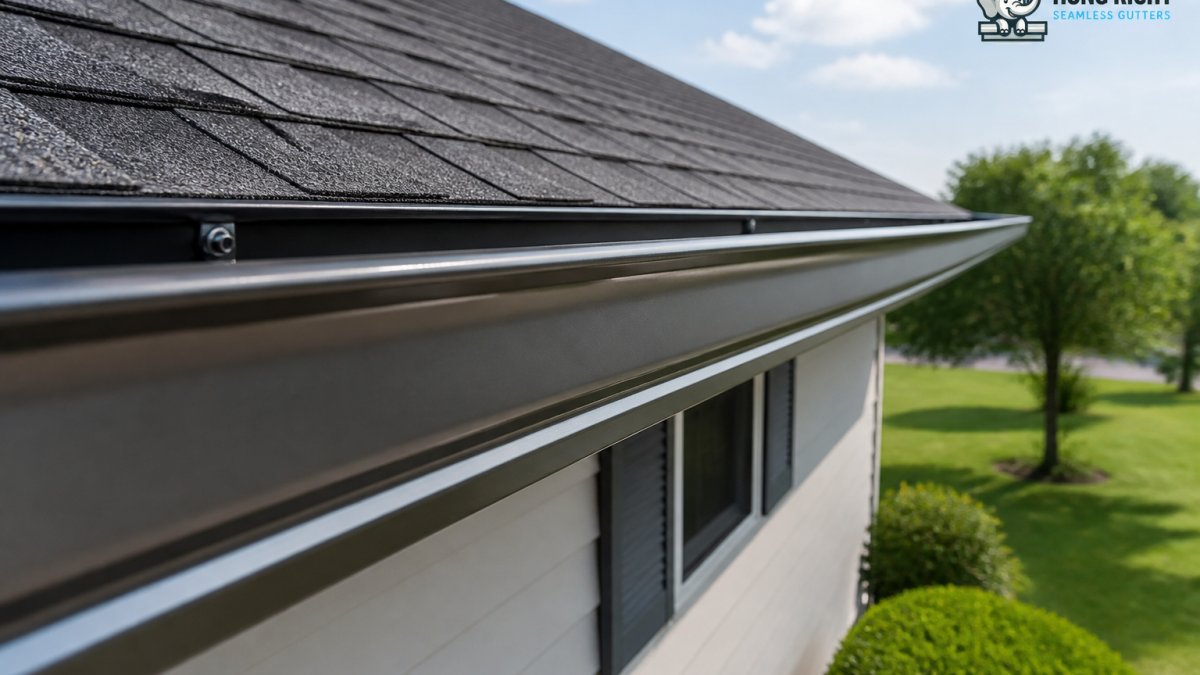
A seamless gutter is a single continuous run of gutter formed from one piece of metal, cut to the exact length of your roofline, no joints every 10 feet, no sealant lines, no rivets.
Joints are where gutters fail first: water sits in the seam, sealant dries out, metal expands and contracts, and eventually the joint opens.
Fewer Seams, Fewer Failure Points
Every seam on a sectional gutter is a spot where water can escape.
Seamless gutters have joints only at corners and downspout outlets. Fewer seams mean fewer leak points, and fewer leak points mean less water damage to your siding, fascia, and foundation.
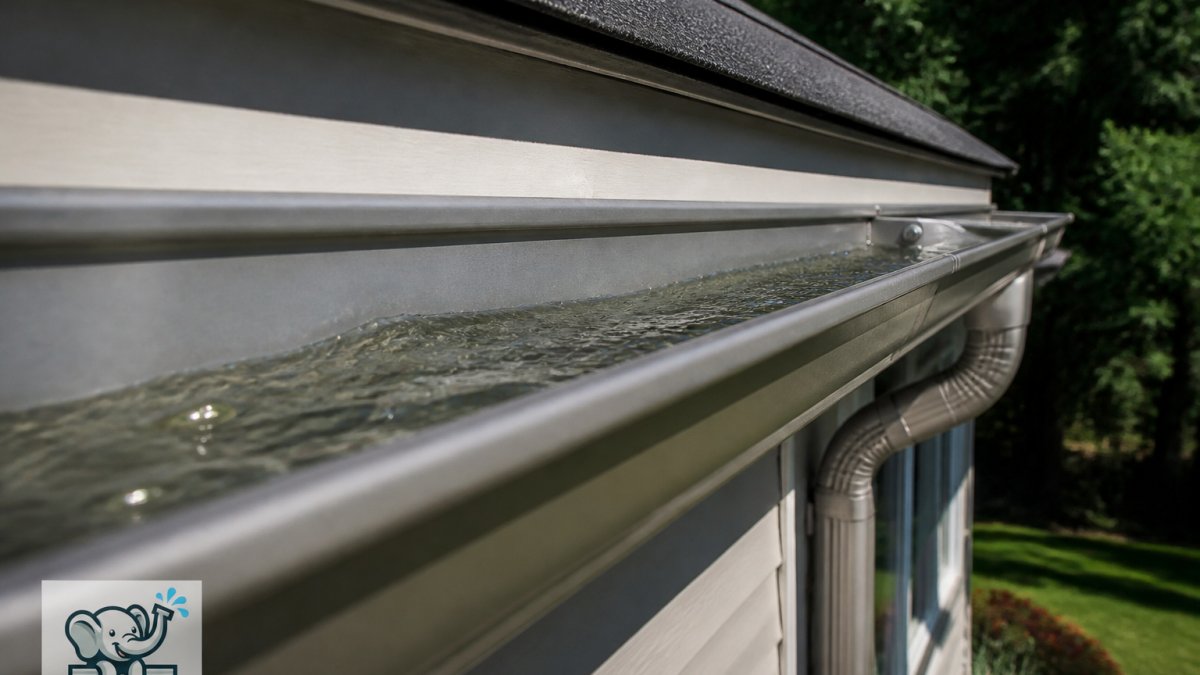
How On-Site Fabrication Changes the Equation
Seamless gutters are formed on-site from a coil of metal, sized to your home, then lifted into place as one piece, no pre-cut sections to line up.
It also lets the installer set the slope correctly in one continuous run. Proper pitch keeps water moving toward the downspouts instead of pooling, and a single well-sloped run drains better than joined sections.
How Long Do Seamless Gutters Last?
Most seamless gutter systems last 20 to 30 years with proper care, and some aluminum systems reach 30 years or more. Sectional gutters often need repair or partial replacement within 10 to 15 years because seams wear out first. Seamless construction removes the seam failure point, it does not guarantee a specific number of years. Real lifespan is set by material, installation, climate, and maintenance.
Lifespan by Material
Material choice sets the ceiling on how long a seamless system can last. These ranges reflect well-installed, maintained residential systems; actual service life varies with thickness, coating quality, and exposure.
- Aluminum: The most common seamless material. Standard thickness runs about 20 to 30 years; thicker profiles and premium finishes can push toward 30-plus years. Aluminum resists rust, but it can dent and its factory finish can chalk or fade over time.
- Steel (galvanized or painted): Stronger and more dent-resistant than aluminum, with a typical range of roughly 20 to 30 years when the coating stays intact. Once the coating is breached, rust spreads quickly, so touch-up matters.
- Copper: The longest-lived common option, often 50 years or more, and it develops a natural patina rather than corroding through. The trade-off is high upfront cost and a look that not every homeowner wants.
Seamless construction alone does not determine longevity. A thin-gauge seamless aluminum gutter with too few hangers can fail sooner than a well-installed sectional system. Material and construction work together.
What Shortens or Extends the Clock
The published range assumes correct installation and maintenance. Several factors move a given installation up or down:
- Metal thickness and coating quality: Thicker coil stock and a quality factory finish resist denting, corrosion, and fading longer than thin, bargain-grade material.
- Slope and hanger spacing: A continuous run set to proper pitch, with hangers spaced per the manufacturer's specification and anchored into solid framing, drains freely and resists sagging. A flat run or widely spaced hangers shortens life regardless of material.
- Climate exposure: Freeze-thaw cycles stress metal and sealant; heavy snow loads test hanger strength; coastal salt air accelerates corrosion on steel and uncoated aluminum; intense heat and UV age finishes and vinyl.
How to Estimate Your Own System's Remaining Life
Rather than relying on a single number, inspect the system against the factors above. A 15-year-old seamless aluminum system that is well-sloped, cleaned annually, and free of dents and coating failure will likely deliver many more years; a 10-year-old system with widespread sagging, coating failure, and repeated clogs is closer to replacement than its age suggests. When in doubt, have an installer assess slope, hanger condition, and coating integrity, those three checks tell you more than the installation date.
Seamless vs Sectional Gutters: A Durability Comparison
Here's how the two systems stack up on the factors that decide how long a gutter lasts.
| Factor | Seamless Gutters | Sectional Gutters |
|---|---|---|
| Leak points | Corners and outlets only | Every joint, corner, and end cap |
| Sealant failure | Minimal | Common at every seam |
| Clog risk | Lower, fewer catch points | Higher, debris catches at joints |
| Sagging | Less likely with proper hangers | More likely at section joints |
| Typical lifespan | 20-30 years | 10-15 years |
| Maintenance needs | Lower | Higher, seam resealing required |
Where Sectional Systems Break Down
Sectional gutters fail at the seams: sealant cracks, fasteners loosen, water finds the gap. Then the cascade starts, a small leak drips onto the fascia board, which rots, and water pools near the foundation, which can lead to basement seepage or settling. What started as a $10 tube of sealant turns into a repair bill for wood rot and drainage work.
Material and Installation Factors That Affect Gutter Lifespan
Material choice sets the ceiling on gutter lifespan, but installation decides whether you get close to it: a premium material installed poorly will underperform a modest material installed well.
Why Joints Are the Weak Point, Mechanically
To understand why seamless construction extends life, see how a joint fails. Every seam on a sectional system is a small assembly: two gutter sections, a connector or slip joint, sealant, and often rivets or screws.
- Sealant dries and cracks. Sealant is a flexible material that loses elasticity as it ages and is exposed to sun and temperature swings. Once it cracks, water reaches the metal edges inside the joint.
- Fasteners loosen. Rivets and screws work loose as the gutter expands and contracts with temperature and as water weight flexes the run. A loose fastener opens a gap.
- Debris catches at the joint. The lip and connector create a small ledge where leaves, shingle grit, and twigs collect. Trapped debris holds moisture against the metal and adds weight.
Each is a small failure, but they feed each other. A seamless run eliminates the joint entirely, so those four failure modes do not exist along the length of the gutter.
Material-by-Material Durability
- Aluminum: Light, rust-resistant, and the most common choice. Standard thickness lasts roughly 20 to 30 years; thicker profiles and premium finishes last longer. It can dent and its finish can fade.
- Steel: Stronger and more dent-resistant, but heavier and prone to rust if the coating fails. Expect roughly 20 to 30 years with intact coating; rust spreads fast once it starts.
- Copper: Lasts decades, often 50 years or more, and develops a natural patina, but costs significantly more upfront.
Installation Details That Decide Real-World Life
- Slope (pitch): The run must slope toward the downspouts at a consistent rate so water never pools. A flat or back-pitched run holds water, which is the single most common cause of premature failure.
- Hanger spacing and anchoring: Hangers spaced per the manufacturer's specification, and anchored into rafter tails or solid framing rather than fascia alone, resist sagging under rain and debris loads. Wider spacing or fascia-only anchoring is a common shortcut that shortens life.
- Fastener choice: Screws that resist pull-out and are appropriate for the material hold better than nails or undersized fasteners.
Climate and Exposure
Durability advice only helps if it accounts for local conditions. Freeze-thaw cycles stress metal and sealant and can pry open any remaining joint; heavy snow loads test hanger strength; coastal salt air accelerates corrosion on steel and unprotected aluminum; heat and UV age finishes and shorten vinyl life; and overhanging branches drop debris and can damage the run. Material and fastening choices should match the exposure.
Repairability: What Can Be Fixed and What Can't
Seamless systems are repairable, but differently from sectional systems. A loose hanger can be re-secured, a small leak at a corner or outlet resealed, and a clogged downspout cleared. Dents can sometimes be worked out; coating damage on steel should be touched up promptly to stop rust. What cannot be fixed economically is widespread sagging, corrosion spread along the run, or a run pulled away from the fascia across much of its length, those point to replacement.
Gutter Maintenance Tips That Add Years to Your System
Cleaning is the cheapest way to extend gutter lifespan. Leaves and twigs trap moisture against the metal and block water flow, and both speed up wear.
Follow this simple schedule:
- Clean gutters at least twice a year, and more often if you have overhanging trees
- Check downspouts for clogs after every major storm
- Look for sagging sections and re-secure hangers as needed
A quick inspection after heavy rain tells you a lot. If water spills over the edge or pools at the base of the downspout, something needs attention.
Do Gutter Guards Really Work for Extending Lifespan?
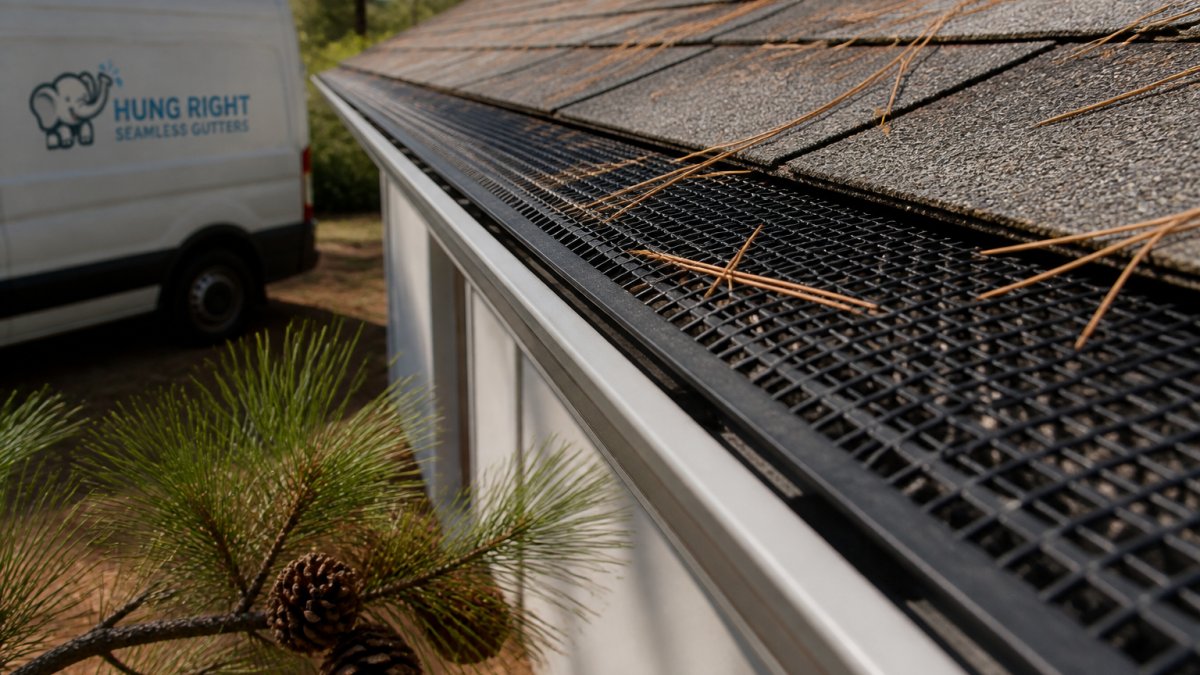
Gutter guards reduce how often debris builds up, which lowers clog risk and cuts maintenance time. They don't make gutters maintenance-free, but a good leaf guard keeps leaves and twigs out while letting rainwater through, less standing water, less weight on the hangers, fewer clogs. For homes surrounded by pine trees or heavy leaf drop, guards can make a real difference.
When to Repair vs Replace: Making the Call
Repair makes sense when damage is isolated: a loose hanger, a small leak at a corner, or a single clogged downspout is a quick fix.
Replacement is the better call when problems show up across the whole system. Watch for these signs:
- Multiple leaks along the run
- Widespread sagging between hangers
- Rust or corrosion that's spread past small spots
If your sectional gutters keep leaking at the seams year after year, patching them is throwing money at a design problem.
At Hung Right Seamless Gutters, we fabricate custom seamless gutters on-site and install leaf guards built for local weather.
Frequently Asked Questions
Why do seamless gutters last longer than sectional gutters?
Seamless gutters are fabricated in one continuous piece on site, so they have no joints where water can seep in. Sectional gutters connect in 10-foot lengths with seams that collect debris and eventually leak. Fewer seams means fewer leak points, less corrosion at joints, and less chance of sagging. That construction difference is why seamless gutters typically outlast sectional systems by several years when both are installed correctly.
How long do seamless gutters last with proper maintenance?
Most aluminum seamless gutters last 20 to 30 years with regular cleaning and inspection. Longevity depends on material, installation quality, and local weather. Cleaning the system at least twice a year, checking hangers for looseness, and flushing downspouts keeps water moving and prevents the standing water that shortens gutter lifespan. Homes surrounded by heavy tree cover need more frequent cleaning.
Do gutter guards really work, or are they a waste of money?
Gutter guards reduce how often you clean your gutters, but they do not eliminate maintenance. Quality leaf screens keep out leaves and twigs while letting rainwater through, which cuts clog frequency and lowers the risk of overflow. They work best when matched to your debris type and installed with the correct slope. Budget for occasional inspection, since small debris and shingle grit can still collect over time.
What affects the lifespan of seamless gutters the most?
Installation quality matters most. Correct slope, secure attachment with properly spaced hangers, and fasteners rated for the material determine whether a system drains well or sags. Material choice comes next: aluminum resists corrosion, while heavier debris loads and harsh weather stress any system. Maintenance habits and climate round out the list, which is why two homes with identical gutters can see very different service life.
If your gutters are leaking, sagging, or nearing the end of their service life, don't wait for water damage to make the decision for you. Hung Right Seamless Gutters brings over 25 years of hands-on experience, on-site custom fabrication, and fair pricing with no corporate markups. We also install specialized leaf screens built to handle local weather. Schedule a free evaluation with Hung Right Seamless Gutters and get a clear plan for protecting your home.