 how-to
Why Seamless Gutters Prevent Foundation Damage
Table of Contents
- How Seamless Gutters Prevent Foundation Damage
- Seamless Gutters vs. Sectional Gutters: Foundation Protection Comparison
- Common seam problems in sectional gutters:
- Signs of Foundation Water Damage to Watch For
- Proper Downspout Drainage Away from Foundation
- Gutter Maintenance to Prevent Water Damage
- Installation Specifications for Foundation Protection
- When to Call a Professional for Gutter Repairs
- Frequently Asked Questions
Last Updated: October 16, 2026
How Seamless Gutters Prevent Foundation Damage
Your gutters directly affect your foundation's health. Understanding why seamless gutters prevent foundation damage, by intercepting roof runoff before it pools against your home's base, is essential to protecting your home.
Without gutters, roof runoff cascades down your walls and collects in the soil around your foundation; with gutters, you control where it goes.
A properly installed seamless system intercepts rainfall, directs it through downspouts, and carries it away from your home's base.
The Role of Gutters in Water Management
Gutters collect roof runoff and channel it to downspouts. Without them, rainwater pours onto the ground beside your foundation, saturating the soil and creating pressure against foundation walls.
Your gutter system is the first line of defense: it catches water before gravity pulls it down your walls, then moves it into the downspout and away from your home.
A well-designed water management system includes:
- Gutters sized to handle your local rainfall volume
- Proper slope so water flows toward downspouts
- Downspouts that extend 4-6 feet from the foundation
- Grading that slopes away from your home
Why Roof Runoff Threatens Your Foundation
Roof runoff is the biggest threat to foundation stability.
Water always seeks the lowest point. When it collects in the soil around your foundation, it pushes inward, and over months and years this pressure causes cracks, seepage, and structural shifting.
Foundation problems from water intrusion include:
- Horizontal cracks in basement walls
- Water seeping through joints and cracks
- Soil erosion that undermines your foundation
- Basement flooding after heavy rain
- Structural settling and wall bowing
Preventing water pooling near your foundation is non-negotiable, which is why seamless gutters prevent foundation damage by stopping this cycle before it starts.
Seamless Gutters vs. Sectional Gutters: Foundation Protection Comparison
The difference between seamless and sectional gutters comes down to leaks. Seamless gutters are fabricated on-site as one continuous piece. Sectional gutters are assembled from multiple sections joined together with seams. Those seams are where water escapes.
| Feature | Seamless Gutters | Sectional Gutters |
|---|---|---|
| Number of joints | 0-2 (corners only) | 10-20+ per 100 feet |
| Leak points | Minimal | Multiple |
| Foundation protection | Superior | Adequate if maintained |
Seamless gutters deliver better foundation protection because fewer seams mean fewer places for water to escape into the soil around your foundation.
Seam Failure and Water Leakage
Sectional gutters are joined at regular intervals, and each joint is a potential failure point. Over time the sealant breaks down, joints separate, and water finds those gaps.
Water leaking from seams falls directly onto the soil beside your foundation, the exact problem you're trying to prevent. Sectional gutters can even cause more damage than no gutters, because water drips from specific points rather than spreading evenly.
Seamless gutters eliminate this risk. A continuous gutter has no seams except at corners and downspout connections.
Common seam problems in sectional gutters:
- Joints separate during freeze-thaw cycles
- Debris clogs joints, causing overflow
- Water drips from seams onto foundation perimeter
Installation Quality and Long-Term Performance
Installation matters as much as material: poor installation means premature failure, regardless of gutter type.
Seamless gutters require on-site fabrication, measured, bent, and cut to your exact roof dimensions, which eliminates waste and ensures proper slope.
Sectional gutters install quickly, but quality varies: poorly sealed joints leak immediately, and incorrect slope makes water pool in the gutter itself. These mistakes often don't show up until the first heavy rain.
Signs of Foundation Water Damage to Watch For
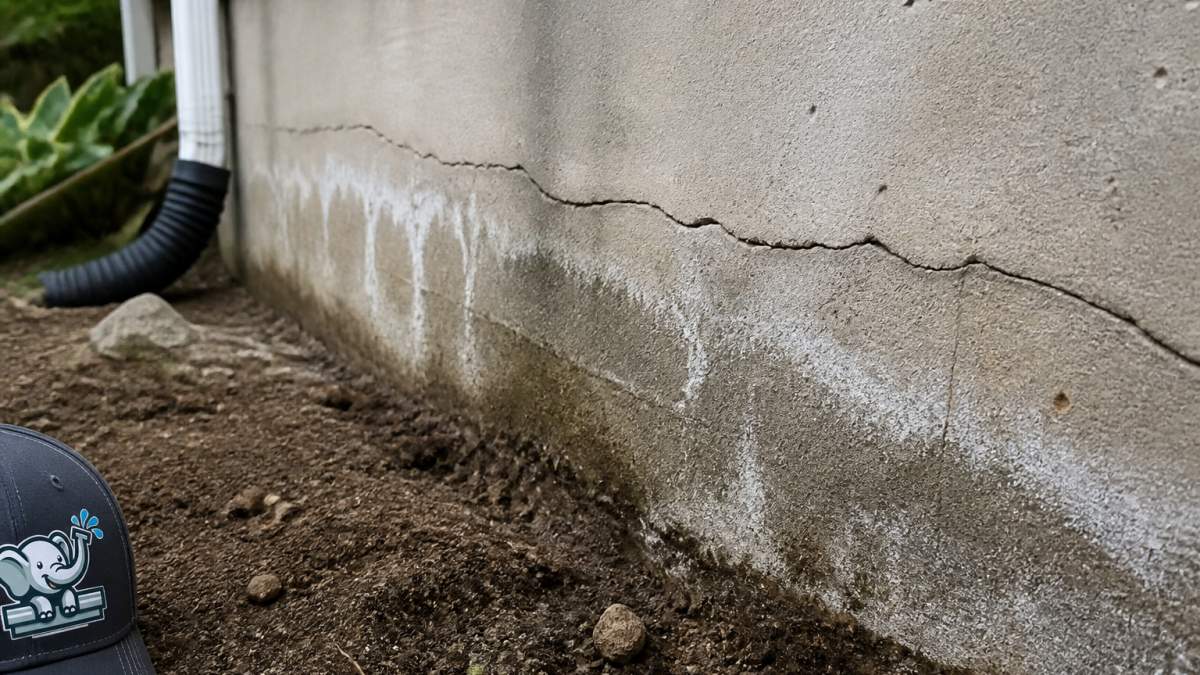
Foundation damage develops gradually, and early detection stops expensive repairs. Watch for these warning signs inside and outside your home.
Interior Warning Signs
Interior water damage is easier to spot, and these signs mean water is already reaching your foundation.
Interior warning signs include:
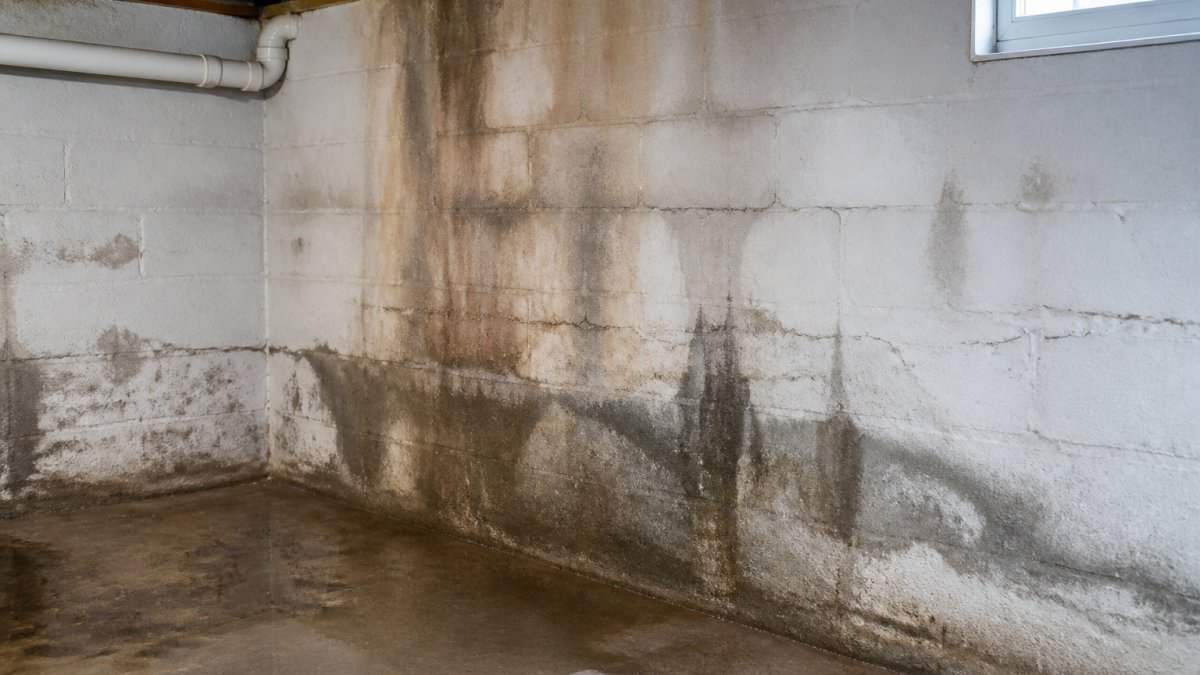
- Water stains on basement walls or floor
- Musty, damp smell in basement or crawlspace
- Efflorescence (white, chalky deposits) on basement walls
- Visible cracks in basement walls or floor
- Peeling paint on basement walls
- Wet spots appearing after heavy rain
Water in your basement after rain means your gutter system isn't working properly, it's either overflowing or leaking through seams, and either way it's reaching your foundation.
Exterior Indicators
Check outside regularly, especially after storms, exterior signs often appear before interior damage does.
Watch for these exterior problems:
- Gutters sagging or pulling away from fascia
- Gutters overflowing during rain
- Water pooling near foundation perimeter
- Cracks in exterior foundation walls
- Soil erosion around foundation
- Cracks in basement walls visible from outside
- Landscape settling or sinking near foundation
Soil erosion is particularly important: if soil washes away from your foundation during rain, your downspouts aren't directing water far enough away.
Proper Downspout Drainage Away from Foundation
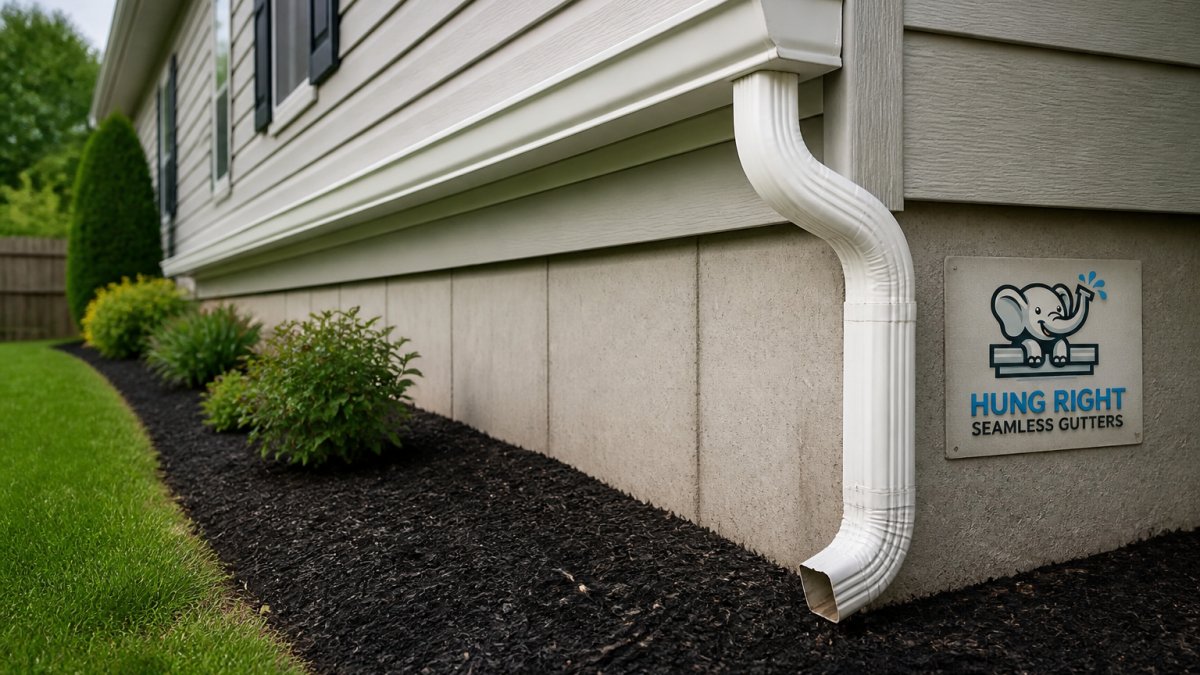
Gutters collect water, but downspouts move it away from your home. A downspout that empties near your foundation defeats the purpose of having gutters.
Downspout placement and extension are critical: water must travel far enough away that it doesn't seep back toward your foundation or pool in the nearby soil.
Discharge Distance and Grading Requirements
Your downspout should discharge at least 4-6 feet from your foundation, giving water time to disperse into the surrounding soil instead of pooling against your home's base.
The ground should slope away from your foundation at least 1 inch per 10 feet, which directs water away naturally.
Best practices for downspout drainage:
- Extend downspouts 4-6 feet minimum from foundation
- Slope ground away from foundation at 1:10 ratio
- Direct downspout water toward drainage swales or storm drains
- Avoid directing downspout toward neighbor's property
- Use splash blocks or underground drainage in tight spaces
Some homes need underground drainage. If your yard is small or slopes toward your foundation, an underground downspout extension carries water away beneath the surface, preventing pooling while keeping your yard functional.
Preventing Soil Erosion and Water Pooling
Soil erosion happens when downspout water flows too fast or concentrates in one spot. As soil washes away, your foundation loses support. Water pooling in that eroded area creates hydrostatic pressure against your foundation walls.
Prevent erosion by dispersing water gradually. Splash blocks break the water's force. Drainage swales spread water across a wider area. Underground systems carry water away completely.
Soil erosion warning signs:
- Visible gullies forming near downspouts
- Exposed soil or gravel where grass used to grow
- Foundation settling or cracking above eroded areas
- Water pooling in low spots near foundation
Healthy soil around your foundation is your best defense against water damage, proper drainage keeps it stable and prevents the intrusion that causes cracks and flooding.
Gutter Maintenance to Prevent Water Damage
The best gutter system fails without maintenance. Debris clogs gutters, causing overflow. Standing water corrodes metal. Neglected gutters stop protecting your foundation.
Regular maintenance keeps your gutter system working. A few hours twice a year prevents foundation damage that costs thousands to repair.
Seasonal Cleaning and Inspection Schedule
Clean gutters twice a year: once in late fall after leaves drop, and once in spring before heavy rain season. If you have trees overhanging your roof, clean more often.
During cleaning, inspect your entire system:
- Remove leaves, twigs, and debris from gutters
- Flush gutters with water to check for clogs
- Inspect seams for leaks or separation
- Check downspouts for blockages
- Look for sagging sections or loose fasteners
- Verify water flows toward downspouts
Spring cleaning is critical. Winter freeze-thaw cycles damage gutters. Ice dams form when gutters are clogged. Debris traps moisture that corrodes metal.
Fall cleaning prevents winter problems: leaves trap moisture and cause ice dams, and clogged gutters overflow directly onto your foundation. It's your best investment in foundation protection.
Identifying and Fixing Common Issues
Catch problems early. Small issues become expensive repairs if ignored.
Common gutter problems and fixes:
- Sagging gutters: Loose fasteners or excessive debris weight. Tighten fasteners or reduce debris accumulation.
- Leaking seams: Sealant failure in sectional gutters. Reseal or replace the section.
- Overflow during rain: Undersized gutters, clogs, or incorrect slope. Clean gutters and check slope.
- Downspout disconnection: Loose connections allow water to pour beside your foundation. Reconnect and secure.
- Rust or corrosion: Metal deterioration reduces gutter lifespan. Repair or replace corroded sections.
Most maintenance is simple. Cleaning takes a few hours. Tightening fasteners takes minutes. These small tasks prevent foundation damage that costs thousands.
Installation Specifications for Foundation Protection
How your gutters are installed determines how well they protect your foundation. Proper specifications ensure your system works correctly for decades.
Slope and Water Flow Considerations
Gutters must slope toward downspouts, since water won't flow uphill. At least 1/8 inch per 10 feet of gutter length keeps water moving steadily toward them.
Incorrect slope makes water pool in the gutters, corroding metal, promoting algae growth, and eventually overflowing, and the added weight causes sagging.
Proper installation includes:
- Measuring roof dimensions accurately before fabrication
- Setting correct slope during installation
- Securing gutters every 2 feet to prevent sagging
- Using gutter hangers rated for your climate's snow load
- Installing gutters slightly lower than the roofline to catch all runoff
Seamless gutters are fabricated to your exact specifications, eliminating the guesswork of sectional systems.
Climate and Soil-Specific Factors
East Texas experiences heavy rainfall and occasional ice storms. Gutters must handle both volume and weight. Seamless gutters fabricated on-site can be sized for local weather patterns.
Soil type matters for foundation protection: clay holds water and creates hydrostatic pressure, sand drains quickly but erodes easily, and loam drains moderately.
Climate and soil factors to consider:
- Annual rainfall in your area
- Frequency of heavy rain events
- Winter freeze-thaw cycles
- Snow load on your roof
- Soil composition and drainage rate
- Groundwater table depth
Professional installation accounts for these factors. Local experience matters. A gutter system designed for your specific location performs better than a generic system.
When to Call a Professional for Gutter Repairs
Some gutter problems require professional help, and knowing when to call saves money and prevents mistakes.
Call a professional if:
- Your gutters are sagging or pulling away from fascia
- You see water damage in your basement or foundation
- Gutters are leaking at seams or joints
- Downspouts are disconnected or clogged underground
- You need seamless gutters installed
- Your roof is steep or your home is tall
- You're unsure whether your gutter system is causing foundation problems
We recommend professional installation for seamless gutters. On-site fabrication requires specialized equipment. Proper slope and fastening require experience.
Foundation damage from water intrusion is expensive and preventable.
If you're concerned about foundation water damage or need a professional evaluation of your current gutter system, we're here to help.
Frequently Asked Questions
How do seamless gutters help protect a home's foundation?
Seamless gutters intercept roof runoff before it reaches the ground, then direct water through downspouts away from your foundation. Because seamless gutters have no seams or joints, they eliminate leak points where water can escape and pool near your foundation. This continuous design keeps water from collecting near your home's base, reducing foundation cracks, soil erosion, and basement flooding.
What's the difference between seamless and sectional gutters for foundation protection?
Sectional gutters are assembled from multiple pieces joined with seams, which are common failure points where leaks develop. Seamless gutters are custom-fabricated on-site as one continuous piece, eliminating joints. With fewer seams, seamless gutters maintain consistent water flow and reduce the risk of overflow that can damage your foundation.
Can clogged or leaking gutters cause foundation damage?
Yes. When gutters clog or leak, water overflows or escapes at seams and pools near your foundation. This standing water increases hydrostatic pressure against your foundation walls, leading to cracks, water intrusion into basements, and structural shifting over time. Regular gutter maintenance and prompt repairs prevent this damage before it becomes costly.
How far should downspouts discharge water from the foundation?
Downspouts should discharge water at least 4 to 6 feet away from your foundation. This distance allows stormwater to drain safely into the yard rather than saturating soil directly against your foundation walls. Proper grading away from the home further prevents water pooling and soil erosion that can undermine foundation stability.