 how-to
Gutter Guards for Pine Needles: How to Choose
Table of Contents
- Why Pine Needles Clog Gutters and Why Guards Are Different
- How to Keep Pine Needles Out of Gutters: Matching Guard Openings to Needle Size
- Best Gutter Guards for Pine Needles: Mesh, Perforated, and Screen Options
- How Gutter Guards Handle Pine Needles in Different Rainfall and Needle Conditions
- Installing Gutter Guards on Existing Gutters: Fit, Pitch, and Compatibility
- Gutter Guard Maintenance: What to Check and How Often to Clean
- Conclusion
- Frequently Asked Questions
Last Updated: October 14, 2026
Why Pine Needles Clog Gutters and Why Guards Are Different
Pine needles are the hardest common debris to keep out of gutters, and gutter guards for pine needles solve a problem leaf guards were never designed for.
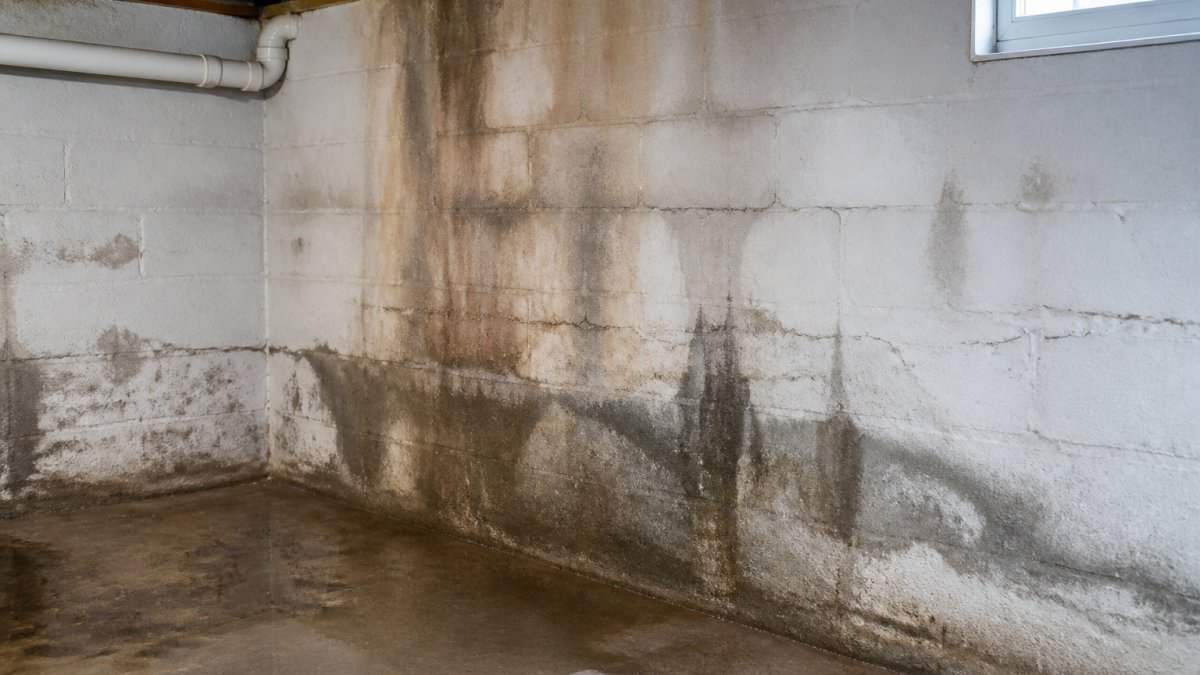
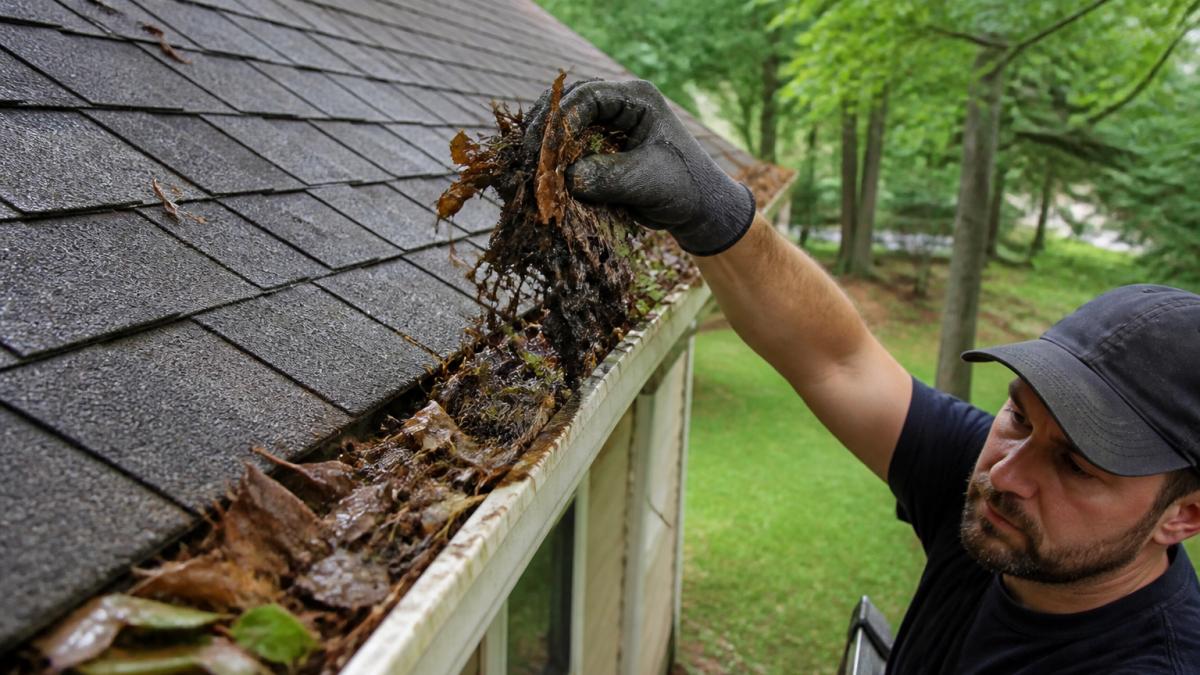
That mat is the danger: water backs up, spills over the fascia, and finds the foundation.
Here is what most guides miss: a guard that stops oak leaves cold can fail completely against pine needles.
How Pine Needles Behave Differently Than Leaves
Leaves are broad and stiff: they land on a guard, dry out, and blow away. Pine needles are narrow and flexible, sliding through openings that would stop any leaf, then lying flat while the next needle crosses them and the layer builds.
Two more traits make pine needles worse:
- They arrive in volume. A mature pine can shed needles continuously, so accumulation never really stops.
- They resist water. A packed needle mat acts like a thatch roof. Rainwater runs across it toward the fascia instead of draining through the gutter.
So the question is never "does this guard block debris" but "does it block debris this small without blocking water."
How to Keep Pine Needles Out of Gutters: Matching Guard Openings to Needle Size
The single number that decides whether a guard works on pine needles is its opening size. Pine needles are typically a few millimeters wide, so any guard with wider openings lets them straight through: if the holes are bigger than the debris, the debris wins.
| Guard Type | Typical Opening Size | Pine Needle Performance | Water Flow |
|---|---|---|---|
| Micro-mesh | Finest mesh, sub-millimeter | Best needle blocking | Good when pitched correctly |
| Perforated aluminum | Small punched holes | Mixed, needles catch on edges | Good until holes clog |
| Plastic or metal screen | Larger mesh openings | Poor, needles pass through | Declines as needles collect |
| Reverse-curve | Open channel design | Poor for needles | Good until channel fills |
| Brush insert | Foam or bristle fill | Poor, needles embed | Poor once saturated |
The takeaway: the smaller and more consistent the opening, the better a guard handles pine needles.
Best Gutter Guards for Pine Needles: Mesh, Perforated, and Screen Options
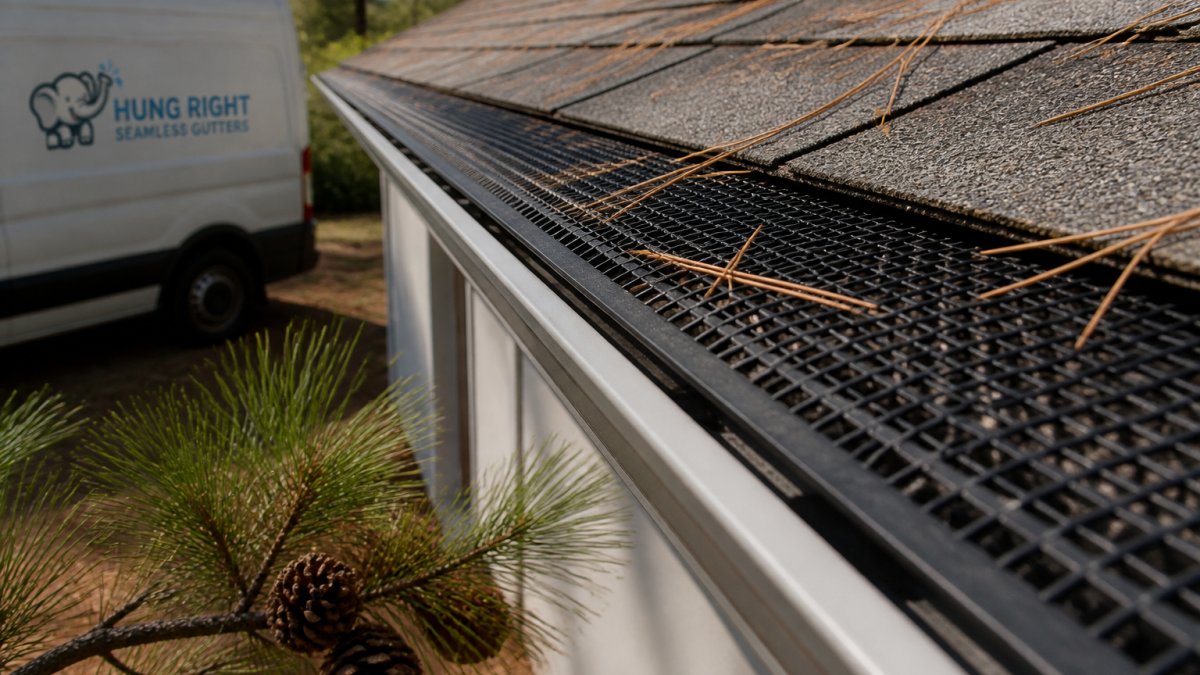
Micro-mesh is the best gutter guard type for pine needles because its openings are fine enough to catch needles while still passing water. Everything else is a compromise.
Micro-Mesh Guards: Smallest Openings, Best Needle Blocking
Micro-mesh guards use fine stainless steel mesh bonded over a metal frame. The openings are small enough that pine needles cannot pass through, so debris sits on top, dries, and blows off.
For pine-heavy properties, this is the option we recommend first. The stainless steel mesh resists rust and holds its shape under needle weight. The trade-off is cost and installation precision: micro-mesh needs the right pitch and a tight fit, or needles find the seams.
Perforated Aluminum and Screen Guards: Where They Fall Short
Perforated aluminum guards have punched holes that vary in size. Small holes catch needles but clog faster as needles bridge across them; larger holes let needles pass through.
Neither option is useless. On a property with mostly leaves and only a stray pine, a perforated guard can do the job. On a pine-heavy property, it will not.
How Gutter Guards Handle Pine Needles in Different Rainfall and Needle Conditions
Performance depends as much on your weather and trees as on the guard.
Three conditions change the outcome:
- Heavy rainfall. Water needs to move fast. If needles have started to bridge the mesh, flow drops and overflow begins at the fascia.
- Heavy needle drop. During a big shed, debris arrives faster than it can dry and blow away, so it stacks up on the guard surface.
- Mixed debris. Needles plus leaves plus seed pods pack tighter than needles alone and dry out more slowly.
The practical lesson: no guard is maintenance-free on a pine-heavy property. The goal is to reduce cleaning frequency, not eliminate it, a guard that turns four cleanings a year into one is doing its job.
University of Minnesota Extension guidance on managing pine needle litter
Installing Gutter Guards on Existing Gutters: Fit, Pitch, and Compatibility
Most guides stop at "choose micro-mesh and hire a pro," leaving the actual work undone. This is a practical installation path for existing gutters on pine-heavy properties, where a few millimeters decide between a working guard and a clogged one.
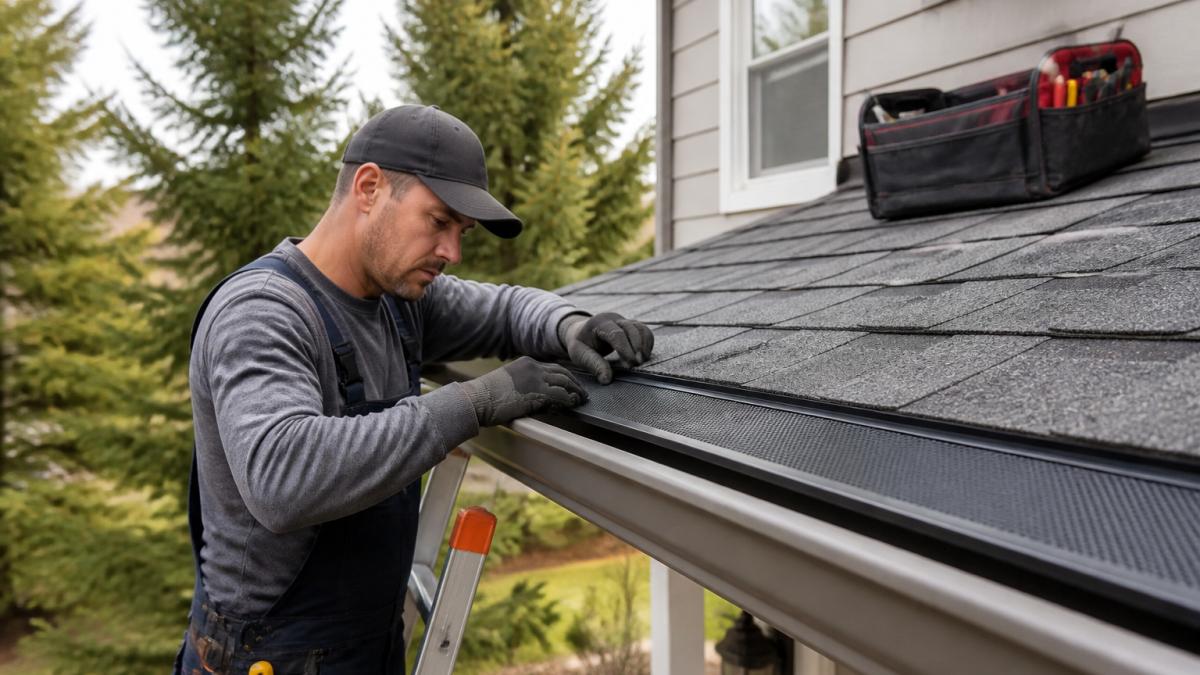
Step 1: Inspect and Repair the Gutter Before You Cover It
A guard sits on top of the gutter, so any existing problem gets buried, not fixed. Before buying anything:
- Walk the full run for sagging sections, separated seams, loose hangers, and rust-through.
- Check the fascia for soft wood, peeling paint, or water staining, which signals long-term overflow.
- Confirm downspouts are clear, a guard on a gutter with a blocked outlet just relocates the overflow.
If the gutter is failing at the seams or the fascia is rotted, replacement is usually the better spend than a guard on top of a compromised system.
Step 2: Measure Gutter Width and Identify the Profile
Guards are sized to the gutter, not the roof. Measure the inside width at several points along the run, because older gutters can vary.
Then identify the profile:
- K-style (ogee) gutters have a flat back, a curved front face, and a rolled or flat lip. Most residential gutters use this profile.
- Half-round gutters have a smooth semicircular shape and need guards made specifically for them.
- Fascia-mount vs. hanger-mount matters too. Some guards clip to the front lip and slide under the shingles; others screw into the fascia or attach to the hangers.
Note whether the front lip is flat or rolled, a guard designed for a rolled lip will not lock onto a flat one. If unsure, photograph the profile from the end of the run and match it to the manufacturer's fit chart before ordering.
Step 3: Check Roof Edge and Shingle Overhang
How the roof edge meets the gutter determines which guard styles will fit:
- Shingle overhang. If shingles extend past the drip edge, a slide-under guard may not seat, and water can wick behind the guard.
- Drip edge condition. A bent or missing drip edge directs water behind the gutter, which no guard can fix.
- Roof pitch. Steep roofs deliver water and needles with more force, so the guard needs a tighter mesh and a secure attachment. Shallow roofs let debris sit, so pitch the guard so needles slide off rather than rest.
Step 4: Set Guard Pitch and Attachment
Pitch is the most common DIY failure on pine-heavy properties. The guard should sit slightly tilted toward the gutter, not flat and not tilted toward the roof. A flat guard lets needles rest and bridge; a guard tilted the wrong way sends water behind the gutter.
Attachment matters as much as pitch:
- Fasten at every hanger or at the manufacturer's specified spacing, not just at the ends.
- Keep the front lip locked down so needles cannot slip under it.
- At the ends and inside corners, cut and fit the guard tightly. Pine needles find every open seam.
Compatibility Checklist Before You Buy
Run this list against any guard you are considering:
- Gutter width matches the guard's stated size (5-inch or 6-inch)
- Gutter profile (K-style or half-round) matches the guard's design
- Front lip type (flat or rolled) matches the guard's clip
If any line is a "no," the guard will likely leave gaps, and gaps are where pine needles win.
If your gutters are sagging, leaking at the seams, or the wrong profile for the guards you want, this is the moment to fix the system rather than cover it. Hung Right Seamless Gutters fabricates seamless gutters on-site, which means the run has no seams to fail in the first place, and we can match a leaf guard to the exact profile.
Gutter Guard Maintenance: What to Check and How Often to Clean
Even the best guard needs attention, and on a pine-heavy property, maintenance is what keeps it working. The goal is fewer, faster, safer cleanings than an unprotected gutter would need.
How Often to Inspect
Pine needle drop is seasonal and heavy. A realistic cadence:
- After every major shed. Late summer through fall is peak needle drop in most pine-heavy regions; walk the run within a few days of a heavy shed.
- Twice a year at minimum. Spring and fall, inspect the full run, downspouts, and end caps.
- After any severe storm. High wind and heavy rain move needles onto the guard surface and into downspout outlets.
With several mature pines, expect to check more often than the manufacturer's general guidance suggests, those intervals assume average debris loads.
What to Look For
- Needle buildup on top of the mesh, especially near downspouts and inside corners
- Needles bridging across the mesh instead of sliding off
- Water pooling on the guard surface after rain
How to Clean Different Guard Types
Cleaning method depends on the guard:
- Micro-mesh. Use a soft brush or a leaf blower on low, working along the run so you lift needles off the mesh instead of pushing them through. Never pressure-wash micro-mesh from directly above; the force drives needles into the gutter.
- Perforated metal. A soft brush works, but needles bridge across the holes, so brush along the surface and clear the holes as you go. Avoid stiff wire brushes that scratch the finish.
- Screen guards. Needles thread through coarse mesh, so cleaning usually means lifting the guard and clearing the channel, not just sweeping the surface.
When you clean, work from a ladder with stable footing, keep three points of contact, and never lean over the gutter to reach. If needles have packed into the channel, lift the guard and clear it by hand rather than flushing it.
When to Call a Professional
DIY maintenance handles surface debris. Call a professional when:
- Needles have packed into the gutter channel under the guard
- The guard has lifted, buckled, or pulled loose from the fascia
- Downspouts are blocked and snaking from the top does not clear them
Professional cleaning typically includes clearing the channel, flushing the downspouts, and checking fasteners and pitch, more than most homeowners can safely do from a ladder.
What Maintenance Really Costs You
Guards do not eliminate cleaning; they change its frequency and difficulty. An unprotected pine-heavy gutter may need cleaning several times a year, often with needles packed into the channel.
The trade-off is real: you spend less time on a ladder, but you still inspect. A guard that is never checked can fail quietly, and a failed guard on a pine-heavy property looks exactly like no guard at all.
Conclusion
Pine needles are the toughest debris a gutter will ever face, and no guard makes them disappear. A good guard cuts your cleaning frequency, protects your fascia, and keeps water moving away from your foundation instead of into it.
If you are tired of climbing a ladder every few weeks, Hung Right Seamless Gutters can help.
Schedule a free evaluation with Hung Right Seamless Gutters and get a gutter system that handles what your pines throw at it.
Frequently Asked Questions
What gutter guard works best for pine needles?
Micro-mesh guards with openings around 200 to 300 microns block pine needles most effectively. Their fine stainless steel mesh stops needles while surface tension pulls rainwater into the gutter. Perforated aluminum and plastic screen guards have larger holes that needles slip through, so they clog faster. If your roof is surrounded by pines, micro-mesh is the most reliable choice.
Can pine needles get through micro-mesh gutter guards?
Most pine needles are wider than the openings in a quality micro-mesh guard, so they cannot pass through. Individual needles usually slide off the surface instead. However, if needles pile up and stay wet, they can form a mat that blocks water from reaching the mesh. Periodic brushing keeps the surface clear and lets the guard do its job.
How do I keep pine needles out of my gutters without guards?
You can reduce needle buildup by trimming branches back from the roofline, installing downspout screens, and cleaning gutters several times a year, especially after heavy needle drop in fall. These steps help, but they do not stop needles from collecting. A micro-mesh guard is the only method that blocks needles at the gutter opening rather than removing them after they land.
Do gutter guards need to match the size and shape of the gutter?
Yes. Guards are made for specific gutter widths and profiles, and a guard that does not seat properly leaves gaps where needles and debris enter. Standard 5-inch and 6-inch gutters each need the matching guard size. If your gutters were installed by a seamless gutter company, ask them to confirm the profile before ordering guards so the fit is tight.