 how-to
What Happens If You Don't Replace Damaged Gutters?
Last Updated: October 23, 2026
Quick Summary
If you don't replace damaged gutters, water dumps in one concentrated spot next to your foundation, into your siding, and into the wood behind it. Over weeks to months this saturates soil, causes erosion and foundation cracks, and rots fascia and siding. By year one and beyond, water reaches roof decking and wall framing, so you pay for structural repair instead of gutter replacement.
- Clogged gutters are the top culprit: debris backs up water and the weight pulls the gutter loose.
- Clay soils swell when wet and shrink when dry, pressuring foundation walls and slab edges.
- Most gutter systems last 20 to 30 years, depending on material and upkeep.
- Isolated damage like one leaking seam gets repaired; rust or detachment across multiple sections means replace.
- Redirect downspout discharge several feet from the foundation as the highest-value interim step.
Table of Contents
- What Happens If You Don't Replace Damaged Gutters: The Short Answer
- The Damage Timeline: What Happens Week by Week After Gutters Fail
- The First Storm: Overflow, Splash, and Immediate Water Paths
- Weeks 1 to 8: Soil Saturation and the Start of Erosion
- Months 2 to 6: Foundation Stress and Interior Warning Signs
- Months 6 to 12: Siding, Fascia, and Exterior Wood Damage
- Year 1 and Beyond: Roof Edge, Wall Structure, and Interior Water
- What Changes the Timeline
- Gutter Overflow Causes: Why Water Ends Up in the Wrong Place
- Signs of Foundation Water Damage You Shouldn't Ignore
- How Long Do Gutters Last? When Age Tips the Scale Toward Replacement
- Damaged Gutter Repair or Replacement: How to Decide
- A Practical Inspection and Triage Checklist
- How to Reduce Risk While You Arrange Repairs
- Frequently Asked Questions
What Happens If You Don't Replace Damaged Gutters: The Short Answer
If you don't replace damaged gutters, water goes next to your foundation, into your siding, and into the wood behind it. We've watched this across East Texas for over 25 years.
Damaged gutters don't heal, and they don't stay put. A small leak becomes a wide one, a loose hanger becomes a fallen section, and water that should leave your roof finds a new path, through your house.
Below: what happens after gutters fail, week by week, and how to spot trouble early.
The Damage Timeline: What Happens Week by Week After Gutters Fail
Damage from failing gutters follows a predictable sequence, though rainfall, soil, lot slope, roof pitch, and foundation type change how fast each stage arrives. Here's the common progression and its checkpoints.
The First Storm: Overflow, Splash, and Immediate Water Paths
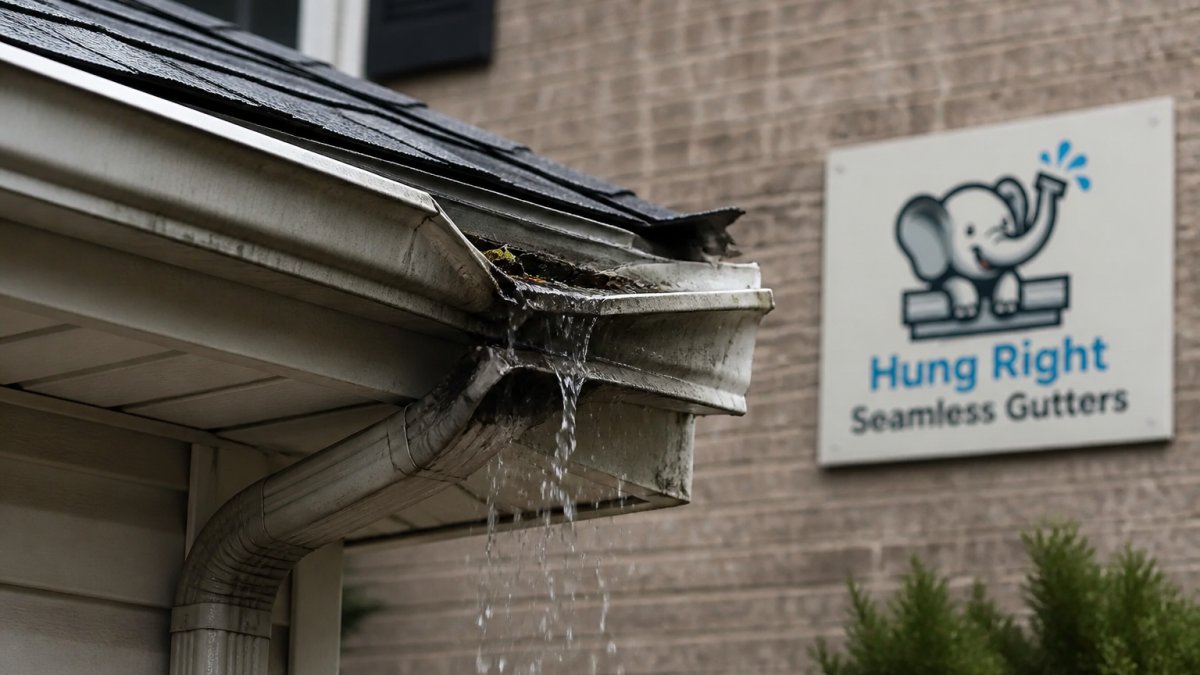
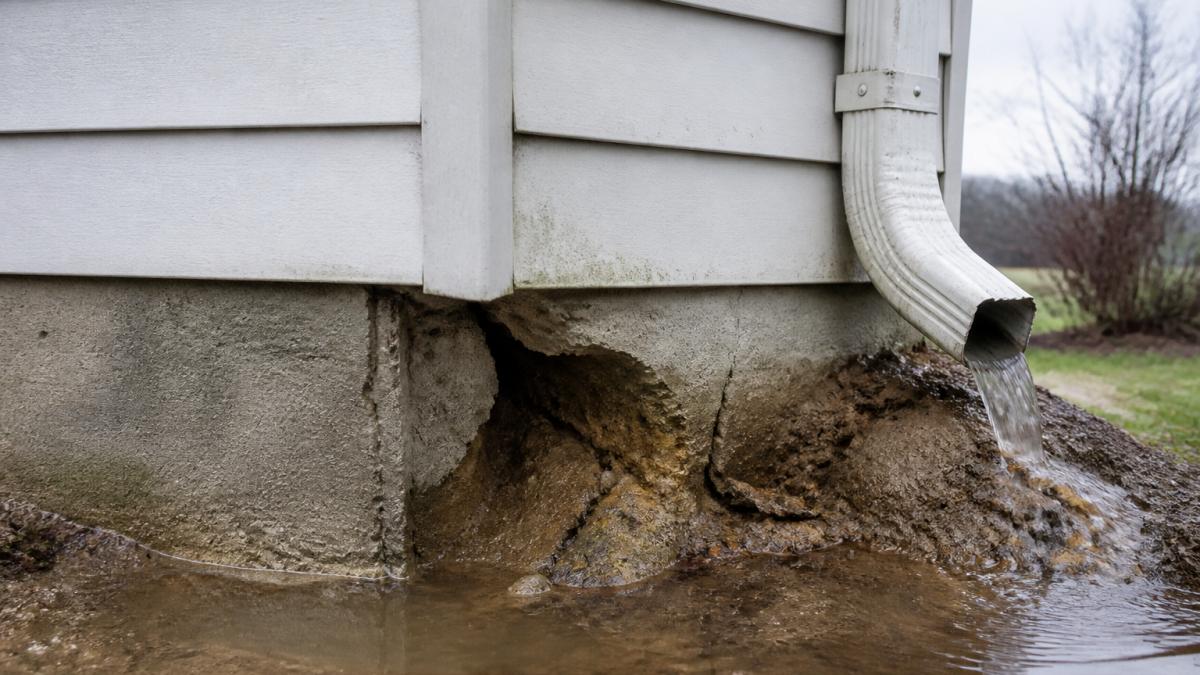
The first heavy rain after a gutter fails shows the whole story: water that should run to the downspout sheets over the edge or dumps through a gap, landing in a concentrated strip along the house.
What to watch for during and right after that first storm:
- Water pouring over the gutter edge instead of running to the downspout
- A visible waterfall at a seam, corner, or detached section
- Splash marks and dark streaks on siding directly below the roofline
The mechanism is concentration: a working gutter spreads water across a long run to a downspout, while a failed one dumps the same volume into one spot, often right against the foundation.
Weeks 1 to 8: Soil Saturation and the Start of Erosion
This is where quiet damage begins: repeated dumps of water in the same spot saturate and move the soil supporting a slab or pier foundation.
A common pattern:
- The ground directly under the discharge point softens and settles
- A depression or channel forms along the house
- The soil pulls away from the foundation, leaving a visible gap
Clay soils are especially punishing: clay swells when wet and shrinks when dry, pressuring foundation walls and slab edges. On sandy or loamy soils, erosion channels form sooner.
Months 2 to 6: Foundation Stress and Interior Warning Signs
By now water has hit the same vulnerable zone for months, and the foundation is reacting.
Watch for:
- Cracks in the slab, brick, or foundation wall, especially stair-step cracks in masonry
- Gaps where the soil has pulled away from the foundation
- Doors and windows that suddenly stick or won't latch
These signs don't always mean the foundation is failing, but they do mean water is reaching places it shouldn't, find the cause before it spreads.
Months 6 to 12: Siding, Fascia, and Exterior Wood Damage
Long-term moisture rots the fascia behind the gutter, wicks into siding, and softens trim and sheathing.
Specific mechanisms to understand:
- Fascia rot: The fascia is the board the gutter is fastened to. When water sits against it or runs behind the gutter, the wood softens and the fasteners lose their grip. A gutter that is pulling away is often a symptom of fascia rot, not just loose hangers.
- Siding wicking: Wood and composite siding absorb water at cut edges and end joints. Paint peels, boards swell, and the damage spreads upward and outward from the wet point.
- Mold and mildew: Persistent moisture on exterior walls feeds mold and mildew, which shows up as dark staining or a green film on siding and trim.
By the end of the first year, the repair scope often includes carpentry, not just gutters.
Year 1 and Beyond: Roof Edge, Wall Structure, and Interior Water
Left long enough, water gets past the roof edge into the wall structure, and costs steepen.
- Roof decking and sheathing at the eaves can soften and rot
- Water can travel along framing and show up as stains on interior ceilings and walls far from the roof edge
- Repeated wetting can lead to wood-destroying insects and fungal growth in framing cavities
At this stage, you're paying for structural repair, not gutter replacement. The gutter is the cheapest part of the job.
What Changes the Timeline
Two houses with the same failed gutter can be months apart in damage. Key variables:
- Rainfall: A climate with frequent heavy storms accelerates every stage.
- Soil: Clay soils amplify foundation movement; sandy soils erode faster.
- Grading and lot slope: A lot that slopes toward the house concentrates water; a well-graded lot sheds it.
Use this timeline as a guide, not a schedule. Check your house against these checkpoints and act at the first sign water is reaching the foundation or exterior wood.
Gutter Overflow Causes: Why Water Ends Up in the Wrong Place
Gutter overflow causes come down to a short list: clogs, sagging, detached sections, bad slope, and undersized downspouts. Find the cause and you'll know whether you're looking at a repair or a full replacement.
Clogs, Sagging, and Detached Sections
Clogged gutters are the top culprit: debris piles up, water backs up, and the weight pulls the gutter loose. Once a section sags or detaches, water dumps in one spot instead of flowing to the downspout.
Loose gutters and fallen gutters are not just an eyesore. They're a funnel pointed at your foundation.
Improper Slope and Undersized Downspouts
Sometimes gutters aren't clogged at all, they were hung with the wrong pitch, so water sits, or the downspouts are too small for the roof area and heavy rain overwhelms them.
Both problems cause overflowing gutters in every storm. Both are fixable, and both get worse with age.
Signs of Foundation Water Damage You Shouldn't Ignore
Signs of foundation water damage usually show up as cracks, uneven floors, or doors that suddenly stick. Water pooling near the house is the cause hiding behind all three.
Check for:
- Cracks in the slab, brick, or foundation wall
- Gaps where the soil has pulled away from the foundation
- Doors and windows that stick or won't latch
Any one of these deserves a look. Two or more, and you should get the drainage checked before anything else.
How Long Do Gutters Last? When Age Tips the Scale Toward Replacement
Most gutter systems last 20 to 30 years, depending on material and upkeep, aluminum at the lower end, copper and quality steel toward the top.
Age alone doesn't decide it, a 25-year-old system cleaned twice a year can outlast a neglected 10-year-old one. But age plus rust, cracks, and repeated leaks usually means replacement wins.
Damaged Gutter Repair or Replacement: How to Decide
Damaged gutter repair or replacement trips most homeowners up. Our rule: isolated damage gets repaired, widespread damage gets replaced.
When Repair Makes Sense
Repair is right when the problem is contained:
- One or two leaking seams
- A single loose or sagging section
- A clogged downspout
If the rest of the system is solid, fixing the bad spot is fast and sensible.
When Replacement Is the Smarter Move
Replacement makes more sense when the damage is spread out. Signs include:
- Rust or cracks across multiple sections
- Gutters pulling away from the house in several places
- Repeated leaks after previous repairs
Patching a failing system repeatedly costs more than one clean replacement, and each patch leaves water free to find the next weak spot.
| Situation | Best Move | Why |
|---|---|---|
| One leaking seam | Repair | Cheap, fast, contained |
| Single sagging section | Repair or reset | Hangers and slope fix it |
| Rust across several sections | Replace | Patches keep failing |
| Pulling away in multiple spots | Replace | Hangers and structure are compromised |
| Near end of lifespan with leaks | Replace | Repair money is wasted |
A Practical Inspection and Triage Checklist
Run this checklist after any heavy storm and each spring and fall, about 20 minutes tells you whether you face a repair or a replacement.
- Look for water pouring over the gutter edge during rain
- Check for sagging or loose gutters along the full run
- Look for detached sections or gaps at the seams
If you check three or more boxes, call a pro for an evaluation. If it's just one, a targeted repair may be all you need.
How to Reduce Risk While You Arrange Repairs
You can limit damage while you wait for a repair crew, keep water away from the house without making things worse or putting yourself in danger.
Safe Interim Steps That Actually Help
These are the measures that reliably reduce risk while a repair is being arranged:
- Redirect downspout discharge. Add a temporary downspout extension or a splash block to push water at least several feet away from the foundation. This is the single highest-value interim step.
- Clear visible debris from gutters and downspouts from the ground using a hose or a tool with an extension, never by climbing on the roof.
- Re-grade soil so it slopes away from the foundation. A gentle slope away from the house helps shed surface water even when the gutter is failing.
These steps won't fix failing gutters, but they buy time and reduce the chance foundation or exterior damage worsens before the repair.
Repair Versus Replacement: The Economics
Repair versus replacement is usually about scope, not price alone. A single repair is almost always cheaper, but repeated repairs on a failing system can cost more over a few years than one clean replacement.
Factors that drive the estimate in either direction:
- Extent of damage: One leaking seam or a single loose section is a repair. Rust, cracks, or detachment across multiple runs points to replacement.
- Gutter material: Aluminum is the most common and generally the least expensive to replace. Steel and copper cost more, and copper especially can justify repair in some cases because of its value and lifespan.
- House size and roofline complexity: More linear feet, more corners, and multiple stories increase both repair and replacement costs.
A practical rule: if repair cost approaches a meaningful fraction of replacement cost, or the same problem keeps returning, replacement is usually the better long-term call.
What to Ask Before You Choose
When you get estimates, ask:
- Is the damage isolated or widespread?
- Is the fascia behind the gutter sound, or does it need repair first?
- Are the hangers and slope the real problem, or is the gutter itself failing?
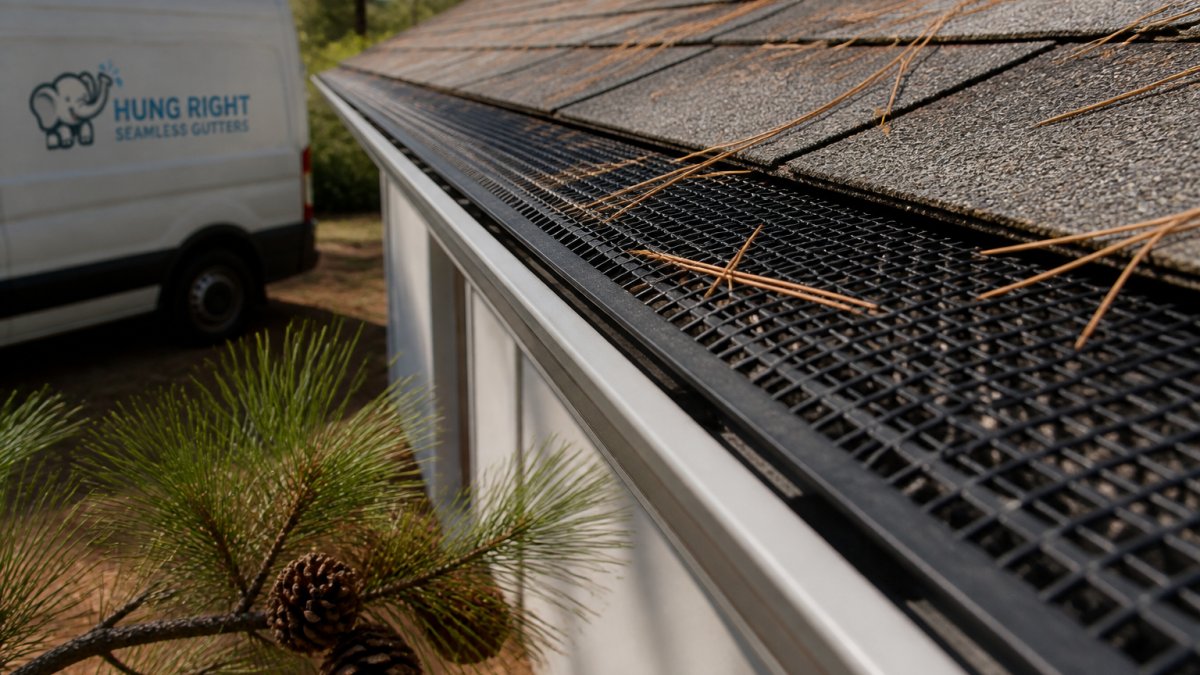
At Hung Right Seamless Gutters, we fabricate custom seamless gutters on-site, so the fit is right the first time. Our family-owned team has 25 years of hands-on experience, and we quote fair, transparent pricing with no corporate markups. We also install leaf guards built for local weather, which keeps debris out and water flowing.
Frequently Asked Questions
How long do house gutters usually last?
Most aluminum gutters last 20 to 30 years, while vinyl often lasts 10 to 20 years and copper can exceed 50 years. In East Texas, heavy rainfall and summer heat can shorten that lifespan, especially if debris is not cleared regularly. If your gutters are over 20 years old and showing cracks, rust, or loose sections, replacement is usually the better investment. Hung Right Seamless Gutters can evaluate your system's age and condition and recommend repair or replacement based on actual wear.
Can damaged gutters cause foundation problems?
Yes. When damaged gutters overflow or leak, water pools around the foundation instead of being directed away. Over time, that moisture can cause soil erosion, uneven settling, and cracks in the foundation. Signs of foundation water damage include cracks in exterior walls, doors that stick, and visible water pooling near the base of the house. Fixing or replacing damaged gutters early is one of the simplest ways to protect your foundation from costly structural repairs.
Can gutters be repaired instead of replaced?
Many gutter problems, including isolated leaks, loose hangers, and small cracks, can be repaired. Repair makes sense when damage is limited and the rest of the system is in good shape. However, if gutters are sagging, pulling away from the fascia, or showing rust and deterioration in multiple sections, replacement is usually more cost-effective. A professional inspection can tell you whether damaged gutter repair or replacement is the right call for your home.
Is it safe to leave a house without gutters?
It is not safe long-term. Without gutters, rainwater falls directly off the roof and collects around the foundation, which can lead to soil erosion, water pooling, and foundation damage. Siding, exterior walls, and fascia also take on more moisture, increasing the risk of mold and mildew. If your gutters are damaged, temporary fixes like extending downspouts can reduce risk while you arrange repairs. Do not leave a home without functional gutters through a rainy season.
Water damage doesn't wait for a convenient week. If your gutters are leaking, sagging, or overflowing, the smart move is to get them looked at now, before the damage spreads to your foundation and siding. Hung Right Seamless Gutters offers fast, reliable repairs and custom seamless replacements, backed by 25 years of experience and fair pricing. Schedule a free evaluation and get your drainage back on track.