 how-to
How to Fix Sagging Gutters and Restore Proper Drainage
Last Updated: October 26, 2026
Quick Summary
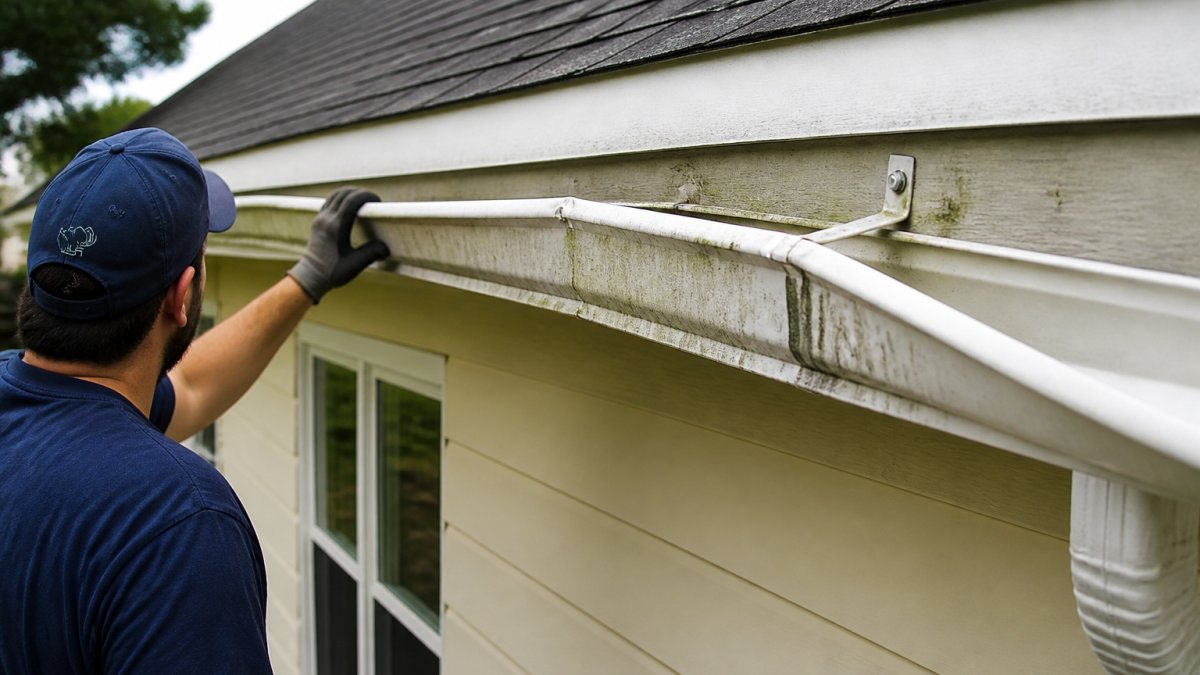
Sagging gutters are sections of rain gutter that have lost their support, their slope, or both, so water pools instead of draining to the downspout. Most of the time the culprit is a failed fastener or a rotten fascia board behind it. Reattach loose sections with gutter screws driven into sound wood, then check the slope before moving on.
- Probe old fastener holes with a screwdriver; soft or crumbly wood means the fascia must be repaired first.
- Replace spikes and ferrules with threaded gutter screws spaced about 24 inches apart along the run.
- Set slope at roughly 1/4 inch of drop per 10 feet of gutter toward the downspout.
- Split runs longer than about 40 feet at a high point and slope each half to its own downspout.
- If more than a few hangers or about 20 feet of gutter is failing, replacement usually beats repair.
Table of Contents
- Why Gutters Sag and What to Check First
- How to Reattach Gutters That Have Pulled Loose
- Replace Gutter Nails with Screws for a Stronger Hold
- Gutter Hanger Replacement: Upgrading to Hidden Hangers
- How to Level Gutters and Set the Right Slope
- Repair or Replace? Decision Thresholds and Cost Factors
- Schedule a Free Evaluation Before the Next Rainstorm
- Frequently Asked Questions
Why Gutters Sag and What to Check First
A sagging gutter is almost never a mystery. Water is heavy, fasteners are small, and wood rots.
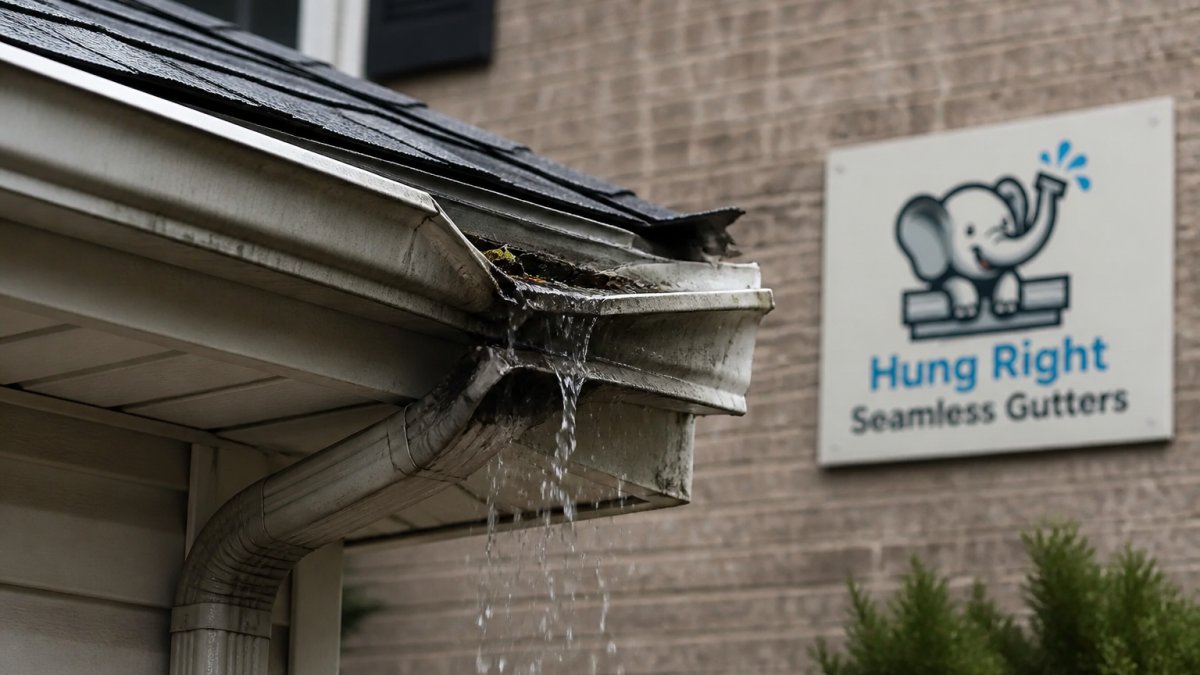
That matters because a gutter holding standing water is doing the opposite of its job. It's adding weight to the exact spot that's already failing.
So before you grab a ladder, figure out what you're actually looking at. The repair is different for a loose hanger than it is for a rotted board.
Inspect for Debris, Loose Fasteners, and Fascia Damage
Start with your eyes, not your tools. Walk the length of the run from the ground and look for three things:
- Sag points. Any spot where the gutter dips below a straight line.
- Staining. Rust streaks or dark water marks under the gutter mean it's been overflowing.
- Separation. Gaps between the gutter and the fascia board, or between gutter sections.
Then check the fasteners. A loose fastener will wiggle when you nudge it. A dead one will spin freely or pull right out.
Finally, look at the fascia board, the wood strip the gutter attaches to. Soft spots, peeling paint, or visible rot mean the wood can no longer hold a screw.
If water is pooling at the base of a downspout or you see debris packed into the outlet, that's a clog, not a sag. Our guide on how to clean clogged downspouts walks through clearing it step by step.
How to Reattach Gutters That Have Pulled Loose
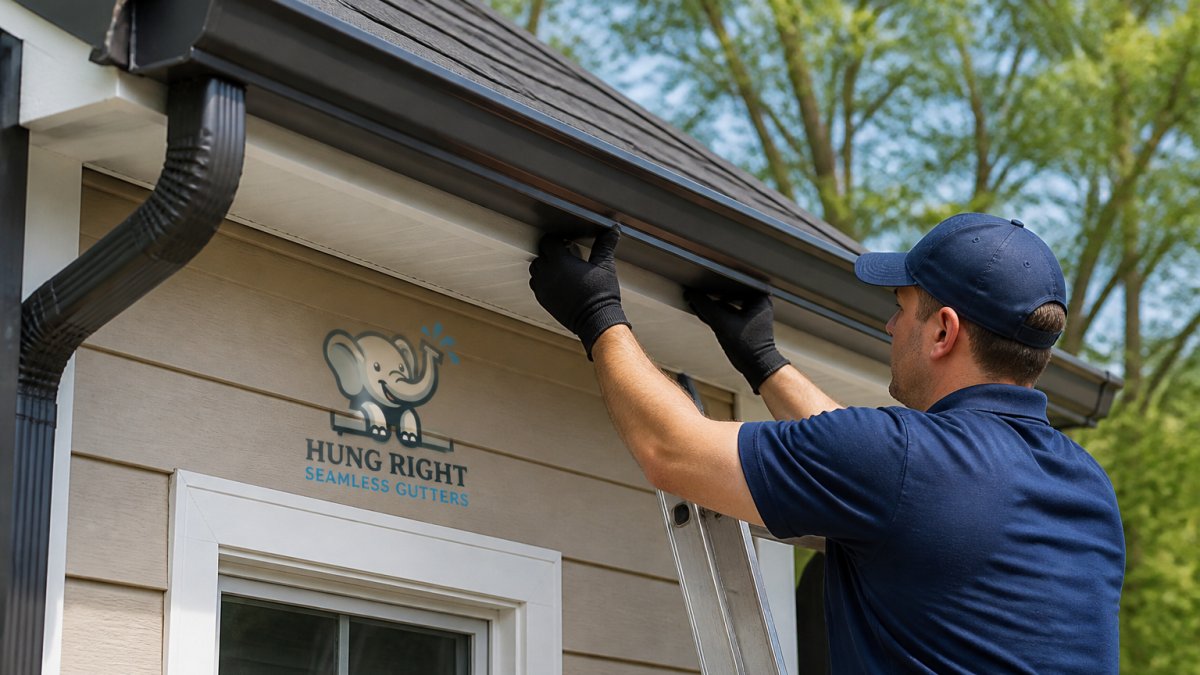
Reattaching a loose gutter takes about 30 minutes per section if the wood behind it is sound. But the repair only lasts if you first confirm why it let go. A gutter that pulled loose because of a failed spike will hold with a new screw. A gutter that pulled loose because the fascia is rotten will sag again after the next heavy rain, no matter how many screws you drive.
Safety first: working at height
Gutter work is ladder work, and ladder falls are among the most common home-injury causes. Before you climb:
- Set the ladder on firm, level ground and use a 4-to-1 rule: for every 4 feet of height, the base sits 1 foot out from the wall.
- Extend the ladder at least 3 feet above the roofline so you have something to hold when you step off.
- Tie off or have a helper foot the ladder. Never lean out to reach a section, move the ladder instead.
If your roof pitch is steep or the run is more than one story up, hire the work out. The cost of a professional repair is almost always less than an emergency room visit.
Diagnose before you reattach
Before driving a single fastener, answer three questions:
- Is the fastener failed, or is the wood failed? Probe the old hole with a screwdriver. If the wood is soft or crumbly, the fascia is the problem, reattach nothing until it is repaired.
- Is there ice or debris loading? A gutter packed with wet leaves or holding an ice dam is carrying far more weight than it was designed for. Clear it and check for guards before rehanging.
- Is the pitch wrong? If the gutter pulled loose at a low point where water pools, the slope was likely wrong before the fastener failed. Fix the pitch as part of the repair (see the slope section).
The reattachment sequence
- Clear the debris out of the affected section first. Wet leaves weigh more than you think.
- Support the gutter from below with a block of wood so it does not twist while you work.
- Pull the old fastener with a claw hammer or pry bar. Do not just drive a new one alongside it, the old hole is already wallowed out.
- Probe the hole with a screwdriver. If the wood is soft, stop and repair the fascia.
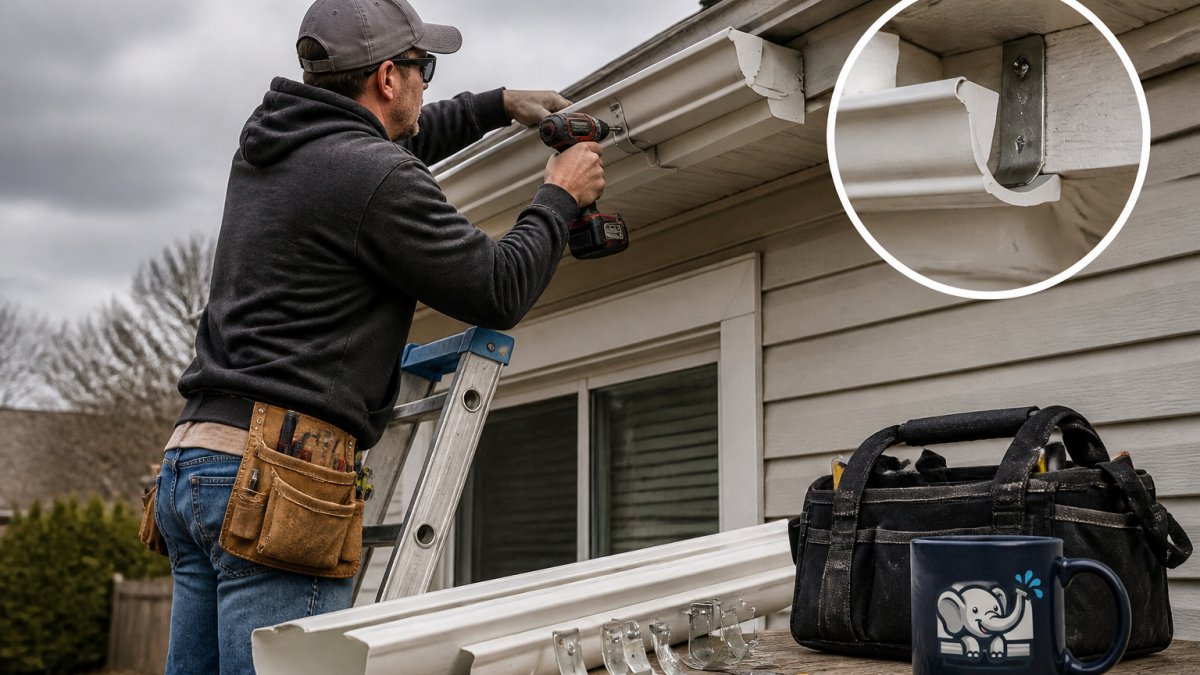
- Drive a new fastener into fresh wood, slightly offset from the old hole. Use a gutter screw with a threaded shank long enough to bite into solid wood, typically 1-1/4 to 2 inches depending on fascia thickness.
- Check the slope before you move on. A reattached section that is level with its neighbors but out of pitch will still pool water.
Fastener and material compatibility
Not every screw works in every gutter. Match the fastener to the gutter material and the hanger type:
- Aluminum gutters: use aluminum or stainless screws to avoid galvanic corrosion where dissimilar metals touch.
- Steel gutters: zinc-plated or stainless screws are fine; avoid bare steel that will rust.
- Hidden hangers: use the screw size the hanger manufacturer specifies, usually a #8 or #10 hex-head screw.
A common pattern is a homeowner who replaces a spike with a drywall screw. It holds for a few months, then pulls out. Use a fastener rated for exterior wood and gutter loads.
Watch out: don't reattach a gutter without finding out why it let go. If you skip that step, the same section will sag again after the next heavy rain.
Replace Gutter Nails with Screws for a Stronger Hold
Here's where we have a strong opinion: gutter spikes and ferrule nails are the weakest link in most old gutter systems. They hold by friction and a bit of compression, and every freeze-thaw cycle and every ladder bump loosens them a little more.
Screws with a threaded shank bite into the wood and stay put. The swap is simple:
- Remove the old spike and ferrule completely.
- Fill the old hole with a short piece of dowel and wood glue if it's oversized.
- Drive a gutter screw through the hanger into solid wood.
You can read more about fastener spacing and material compatibility from the International Association of Certified Home Inspectors, which covers common gutter attachment failures.
This one change prevents most of the sagging gutters we get called out to fix.
Gutter Hanger Replacement: Upgrading to Hidden Hangers
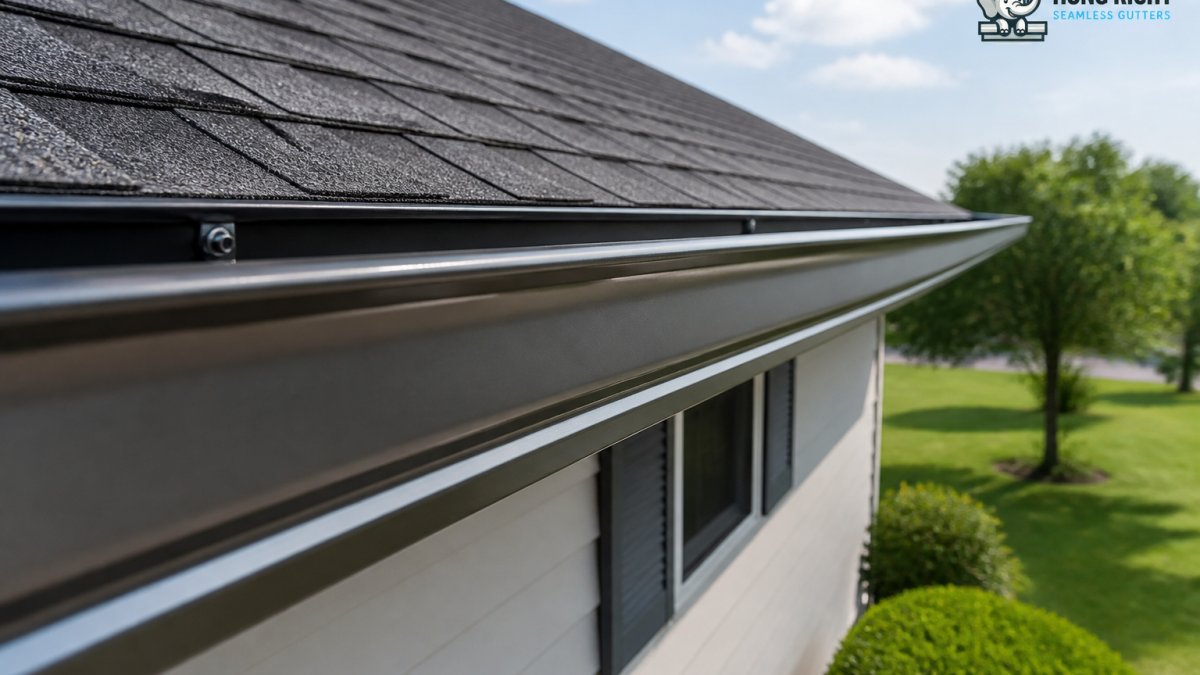
Hidden hangers are the modern standard, and for good reason. They mount inside the gutter so you don't see them, and they grab the front lip and the back wall at the same time. That spreads the load across the whole hanger instead of one nail head.
Replacing old brackets with hidden hangers:
- Remove the old hangers one at a time, working from one end.
- Slide the new hidden hanger into the gutter and hook the front lip.
- Drive the screw through the back of the hanger into the fascia.
- Keep the spacing consistent, roughly every 24 inches.
- Add an extra hanger within 12 inches of each end and each downspout outlet.
If you're coming from spike-and-ferrule brackets, expect the new hangers to feel dramatically more solid. They are.
How to Level Gutters and Set the Right Slope
Gutter slope is the downward angle of the run toward the downspout, and the common target is about 1/4 inch of drop for every 10 feet of gutter. Too flat and water sits. Too steep and the water outruns the outlet, leaving the far end of the run dry and the near end overloaded.
Most sagging-gutter repairs fail at this step, not at the fastener. A hanger that is tight but set at the wrong height will pool water just as reliably as a loose one. So treat slope as the acceptance test for every repair you make.
Measure pitch without guessing
You do not need a laser level. A string line and a tape measure are enough:
- Set the high end first. Pick the end of the run farthest from the downspout. That end should be the highest point.
- Tie a string line from the high end to the low end, pulled taut just under the gutter lip (or along the top edge of the fascia).
- Measure the gap between the string and the gutter at the low end. For a 30-foot run, you want roughly 3/4 inch of drop (1/4 inch × 3). For a 40-foot run, about 1 inch.
- Check the midpoint. The gap at the halfway point should be about half the total drop. If it is not, one or more hangers in the middle are out of line, fix those before adjusting the ends.
A common mistake is measuring from the roofline instead of the gutter itself. Roofs are not always level, and the gutter is what has to drain.
Long runs and multiple downspouts
A single run longer than about 40 feet should not slope in one direction. Split it at a high point near the middle and slope each half toward its own downspout.
For runs with more than one downspout, check each segment separately. A hanger that is correct for one segment can be wrong for the next, especially where the gutter changes direction at a corner.
Verify with a water test
After adjusting hangers, run a hose at the high end for several minutes and watch the flow:
- Water pools anywhere along the run → that hanger is too high; lower it slightly.
- Water shoots past the downspout outlet → the slope is too steep near the outlet; raise the low end or add an outlet.
- Water backs up at a seam → the seam is sagging relative to its neighbors; check the hangers on both sides.
If the gutter will not hold slope no matter how you adjust the hangers, the fascia behind it is probably out of plane. That is a fascia repair, not a hanger repair, see the decision table below.
Repair or Replace? Decision Thresholds and Cost Factors
Use this rule of thumb: if more than a few hangers or more than about 20 feet of gutter is failing, replacement usually makes more sense than repair. For local repair costs and fix options, see our guide to seamless gutter repair in Tyler TX. To estimate replacement expenses against repair, use our gutter installation cost estimator.
| Situation | Best Move | Why |
|---|---|---|
| 1-2 loose hangers, sound fascia | Repair | Fast, cheap, holds fine |
| Rotten fascia behind the run | Repair fascia, then rehang | New fasteners won't hold in soft wood |
| Multiple failed seams and sags | Replace | Repair cost adds up fast |
| Gutter over 20 years old | Evaluate replacement | Metal thins and seams fail |
| Repeated clogs at downspouts | Clean and add guards | Drainage problem, not a sag problem |
And if you're wondering what happens when damaged gutters get ignored, our breakdown of the consequences of skipping gutter replacement covers the foundation and fascia damage that follows.
A common mistake is replacing gutters without fixing the fascia underneath. The new system fails within a season.
Schedule a Free Evaluation Before the Next Rainstorm
Sagging gutters are a small problem that turns into a big one. Water that pools in a loose run finds its way into fascia, siding, and eventually the foundation. Catching it early is the whole game.
If you'd rather not spend a Saturday on a ladder, we get it.
You can request a free evaluation and we'll take a look before the next storm rolls through.
Frequently Asked Questions
What causes gutters to sag in the first place?
Sagging gutters usually come from three things: heavy debris and standing water that overload the hangers, fasteners that have pulled out of rotted fascia board, or hangers spaced too far apart for the load. In East Texas, pine needles and heavy spring rains speed this up. Before you reattach anything, clean the gutter out and check the fascia behind it. If the wood is soft or crumbling, new fasteners will just pull out again, so the fascia has to be repaired or replaced first.
How do you level gutters and set the correct slope?
Gutters need to drop about 1/4 inch for every 10 feet of run toward the downspout, which keeps water moving without looking crooked from the ground. To check it, tie a string line from the high end to the downspout end and measure the gap at the middle. If the gutter is flat or pitched backward, loosen the hangers and adjust them one at a time, working from the high point down. A water test with a hose confirms the flow before you tighten everything down.
Should I replace gutter nails with screws or hidden hangers?
Yes, in most cases. Old-style gutter spikes work loose as the wood around them swells and shrinks, which is why so many gutters sag after a few seasons. Replacing them with gutter screws or hidden hangers that lock into the fascia gives a much stronger hold. Hidden hangers also let you adjust the pitch later without pulling the gutter down. Match the fastener length to your fascia thickness, and space hangers every 24 inches or closer in areas that collect a lot of water.
When should you replace a sagging gutter instead of repairing it?
Repair makes sense when the gutter itself is intact and the problem is fasteners, slope, or fascia. Replace when you see rust-through, cracks at the seams, separated sections, or a gutter that has lost its shape and won't hold a line no matter how you adjust the hangers. If the system is more than 20 years old or has failed in several spots at once, replacement usually costs less over time than repeated repairs. A free evaluation can tell you which side of that line you're on.
Gutters that sag once will sag again if the cause never gets fixed. If you want a system that actually holds its slope through a Texas downpour, get started with Hung Right Seamless Gutters and schedule a free evaluation. We'll check the hangers, the fascia, and the pitch, then give you a straight answer on repair versus replacement.