 blog
Commercial Gutter Repair Services: Complete Guide
Table of Contents
- Why Commercial Gutter Repair Matters for Property Protection
- Signs Your Commercial Gutters Need Repair
- How to Clean Clogged Downspouts and Prevent Overflow
- Commercial Gutter Repair vs. Replacement: When to Do Each
- Understanding Gutter Repair Cost and What Affects Pricing
- Commercial Gutter Cleaning and Maintenance Plans
- Seamless Gutters and Gutter Guards for Long-Term Performance
- How to Choose a Reliable Commercial Gutter Contractor
- Frequently Asked Questions
Last Updated: October 19, 2026
Why Commercial Gutter Repair Matters for Property Protection
Commercial gutter repair protects your building's structural integrity by directing rainwater away from the roof, walls, and foundation, where intrusion causes deterioration, mold growth, and expensive repairs.
When gutters fail, water pools on the roof or cascades down the exterior, causing foundation cracks, basement flooding, and damage to siding and landscaping, disrupting operations and creating liability issues.
At Hung Right Seamless Gutters, we've seen neglected gutters turn small leaks into major structural problems. Regular inspection and timely repairs prevent most of these issues.
Signs Your Commercial Gutters Need Repair
Your gutters send warning signals long before catastrophic failure. Spotting them early prevents expensive problems.
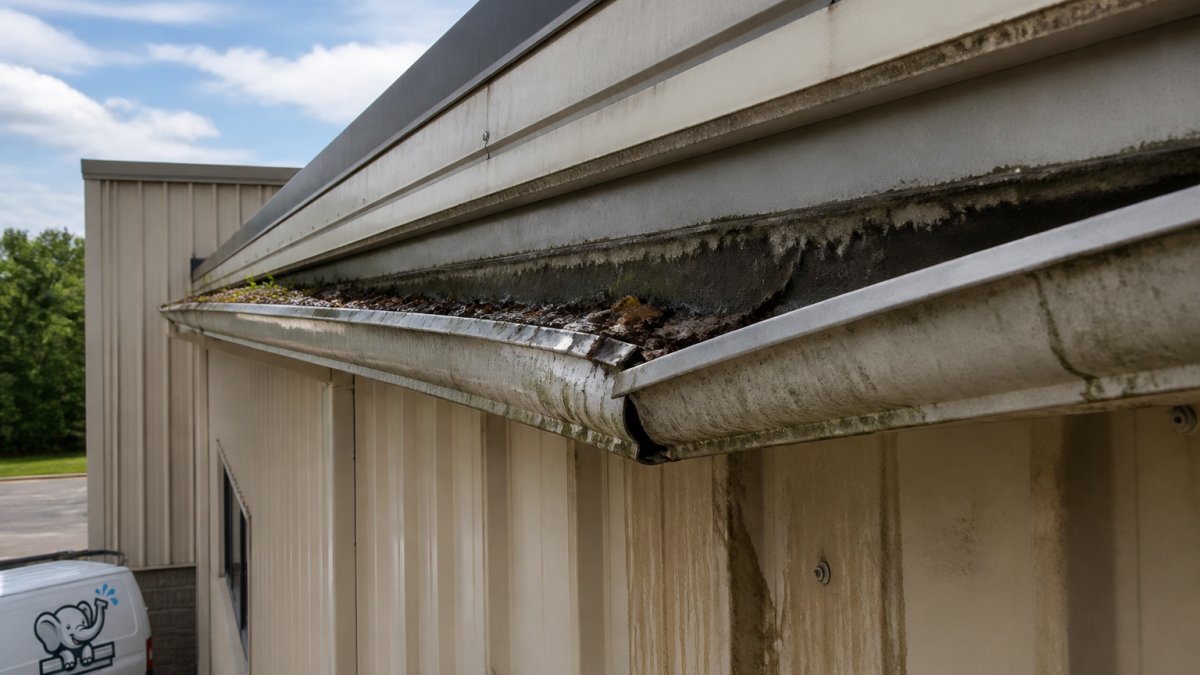
Sagging gutters indicate repair is needed. Gutters should slope toward downspouts, but heavy debris, standing water, or deteriorating fasteners cause them to pull away from the roofline, breaking the seal and letting water spill behind the system.
Visible leaks at seams or joints signal your gutter system needs attention, even seamless gutters can develop problems at downspout connections or corners. Water staining on the exterior wall below a gutter is a clear sign water is escaping.
Overflow during heavy rain means your downspouts aren't handling the volume, often because they're clogged, too small for your roof area, or improperly pitched, putting moisture directly against your building's exterior.
Rust spots, corrosion, or visible holes mean the metal is breaking down. On commercial properties exposed to harsh weather, deterioration accelerates without maintenance, creating leak points.
Gutters pulling away from the fascia board indicate fastener failure or structural stress, allowing water to run behind the gutter and soak into your building's framing.
How to Clean Clogged Downspouts and Prevent Overflow
Clogged downspouts are the most common cause of gutter overflow. Leaves, pine needles, dirt, and debris accumulate inside, blocking flow and forcing water to back up into the gutter.
Cleaning downspouts regularly prevents backup. Flush the downspout with a garden hose from the top; high pressure often dislodges debris. If water still doesn't flow freely, the clog is deeper.
For stubborn clogs, feed a plumbing snake or auger down the downspout and rotate it to pull out compacted debris, effective for most residential and light commercial downspouts.
On commercial buildings with larger downspouts, consider hiring professionals with specialized equipment. High-pressure jetting systems clear downspouts quickly and thoroughly without damaging the ductwork.
After clearing the clog, run water down the downspout to confirm it drains completely, and check that water discharges at least 4-6 feet from the foundation. If not, extend it with an elbow or splash block.
Prevention starts with keeping gutters clean. Remove leaves and debris at least twice a year, more often with many trees, so debris doesn't wash into downspouts.
Commercial Gutter Repair vs. Replacement: When to Do Each
Deciding between repairing and replacing your commercial gutter system depends on damage extent, system age, and cost.
Repair is the right choice when:
- Damage is localized to one or two sections
- The gutter system is relatively new (under 15 years old)
- Leaks are at seams or joints rather than in the gutter body itself
- Sagging is caused by debris load or loose fasteners, not structural failure
- The overall system is still functioning for most of its length
Repairs address specific problems quickly and cost far less than replacement: a leaking seam resealed, a sagging section re-fastened, a small hole patched, extending the life of your existing system.
Replacement becomes necessary when:
- The gutter system is 20+ years old and showing widespread deterioration
- Multiple sections have rust, corrosion, or holes
- The system has chronic leaks despite repeated repairs
- Sagging is severe and affects large sections of the gutter run
- The cost of repairs approaches 50% or more of replacement cost
Replacing with seamless gutters offers long-term advantages: fewer joints where leaks develop, less maintenance, and longer life than sectional systems, since they're custom-fabricated to fit your roof dimensions.
The repair-to-replacement transition isn't always clear-cut. A professional inspection determines whether your system can be salvaged, often one major repair prompts consideration of full replacement, since the math sometimes favors it.
Understanding Gutter Repair Cost and What Affects Pricing
Gutter repair cost varies based on your property and the damage involved. Understanding these drivers helps you evaluate quotes and budget.
Extent of damage is the primary cost driver. Repairing a single leaking seam costs far less than replacing multiple deteriorated sections; a professional inspection identifies what needs repair and what can wait.
Accessibility affects labor costs. Ground-level repairs are straightforward and cheaper; multi-story buildings require lifts or scaffolding, increasing labor time and equipment costs.
Material choice impacts pricing. Seamless systems cost more upfront than sectional but justify it through longevity and lower maintenance. Aluminum is cheaper than copper or steel but less durable in harsh weather.
Seasonal timing can influence pricing. Many contractors offer more competitive rates in slower seasons (winter) than during peak demand (spring and fall).
System complexity matters for commercial properties. Buildings with multiple roof levels, valleys, or unusual angles require more fabrication and installation time.
Rather than guessing at cost, request a professional evaluation; contractors can estimate accurately only after assessing your situation. At Hung Right Seamless Gutters, we offer free evaluations so you understand exactly what's needed and what it costs, no surprises or hidden charges.
Commercial Gutter Cleaning and Maintenance Plans
Regular cleaning and maintenance keep your commercial gutter system performing reliably and extend its lifespan, preventing small problems from becoming major repairs.
Seasonal cleaning is the foundation of gutter maintenance. Fall cleanup removes leaves and debris accumulated during autumn. Spring cleaning clears winter debris and allows inspection for freeze-thaw damage. For properties in heavily wooded areas, additional cleanings in summer may be necessary.
Inspection during cleaning catches problems early. Checking for leaks, rust, corrosion, and structural issues while cleaning means you address them before they worsen.
Downspout flushing ensures water flows freely. Blocked downspouts cause backup and overflow even if gutters are clean. Flushing downspouts with high-pressure water during maintenance prevents this common issue.
Gutter guard maintenance reduces cleaning frequency. If your system includes gutter guards or leaf screens, periodic cleaning of the guards keeps them functioning; they block most debris but still require occasional attention.
Preventive repairs during maintenance visits address small issues before they escalate; resealing a developing leak or tightening loose fasteners during a cleaning prevents costly damage later.
Many commercial property managers benefit from scheduled maintenance plans, which establish regular cleaning and inspection on a predictable schedule. Contractors familiar with your property spot problems quickly and maintain consistent quality.
Seamless Gutters and Gutter Guards for Long-Term Performance
Seamless gutters represent a significant upgrade over traditional sectional systems, particularly for commercial properties where reliability and durability matter.
Seamless gutters are fabricated on-site to match your exact roof dimensions, eliminating the joints and seams where water escapes. Fewer seams mean fewer leak points and less maintenance.
Durability advantages make seamless gutters a smart investment.
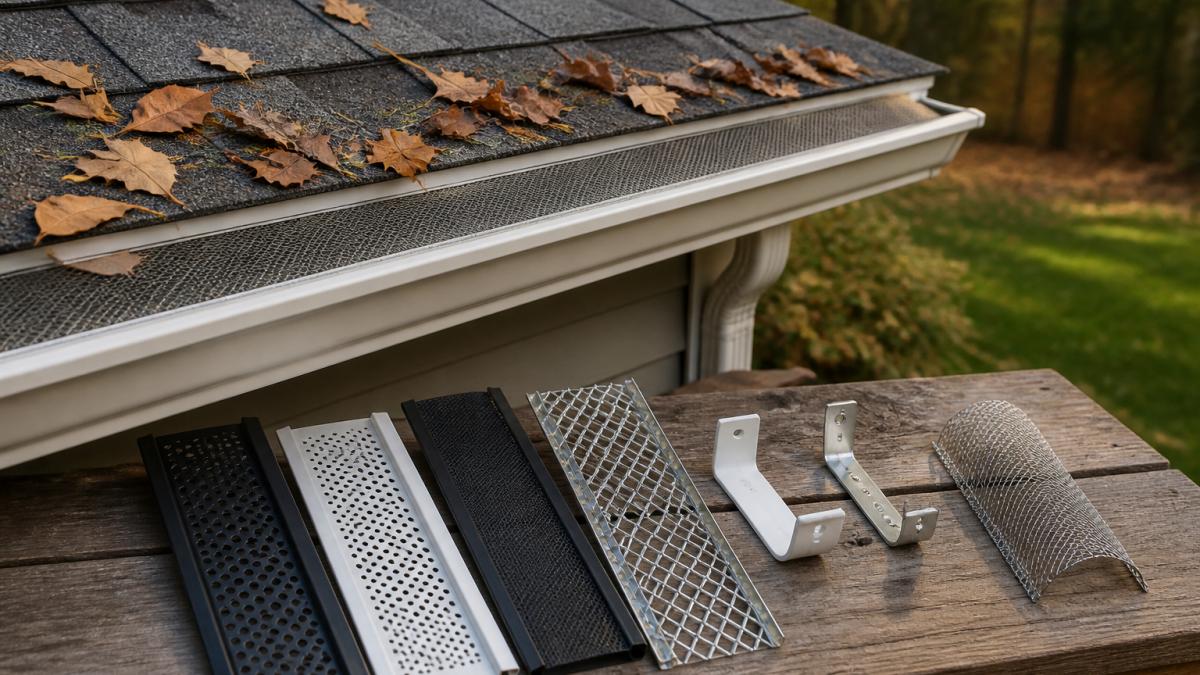
Gutter guards and leaf screens provide additional protection by preventing debris from entering the gutter system. These devices let water flow through while blocking leaves, pine needles, and other debris.
Types of guards include:
- Mesh screens that block debris while allowing water through
- Solid covers with a curved design that directs water into the gutter
- Brush-style guards that sit inside the gutter
- Foam inserts that fill the gutter cavity
Each type has trade-offs. Mesh screens are affordable but require occasional cleaning. Solid covers prevent most debris but can ice over in winter. Brush guards are easy to clean but less effective in heavy rain.
For commercial properties, the best guard choice depends on your local weather, surrounding vegetation, and maintenance preferences. A professional can recommend the option that fits your situation.
At Hung Right Seamless Gutters, our custom seamless gutters are fabricated on-site with high-quality leaf screens designed for local weather conditions. This combination keeps water flowing and debris out, protecting your commercial property year-round.
How to Choose a Reliable Commercial Gutter Contractor
Selecting the right contractor for your commercial gutter work affects both repair quality and your long-term satisfaction.
Experience and track record matter most.
Licensing and insurance are non-negotiable. Verify that the contractor holds proper licensing for your state and carries liability insurance.
Transparent pricing builds trust.
Warranty and guarantees show confidence in the work. Ask what warranty covers the materials and workmanship.
Local knowledge is valuable for commercial properties.
Communication and responsiveness matter during and after the job.
Professionalism extends to how the job site is managed. Your property should be left clean after work is complete. Materials should be handled carefully.
When evaluating contractors, trust your instincts. A company that seems disorganized, evasive about pricing, or dismissive of your questions probably won't deliver quality work.
Protecting your commercial property starts with functional gutters that handle rainfall and direct water away from your building. Whether you need repairs, maintenance, or a complete system upgrade, addressing gutter problems promptly prevents water damage and costly structural issues.
The best commercial gutter systems combine quality materials, professional installation, and regular maintenance.
Schedule a free evaluation with Hung Right Seamless Gutters to assess your commercial property's gutter needs.
| Service Type | Best For | Key Benefit |
|---|---|---|
| Gutter Repair | Localized damage, newer systems | Quick fix, lower cost |
| Gutter Replacement | Widespread deterioration, aging systems | Long-term durability, fewer leaks |
| Seamless Gutters | Commercial properties, high rainfall areas | Custom fit, fewer seams, better drainage |
| Gutter Guards | Properties with heavy debris loads | Reduced maintenance, fewer clogs |
| Maintenance Plans | All commercial properties | Preventive care, consistent performance |
Additional Resources:
NFPA guidelines on building drainage systems provide standards for commercial water management and gutter installation that contractors should follow.
EPA guidance on stormwater management explains how proper gutter and drainage systems contribute to effective stormwater control on commercial properties.
National Roofing Contractors Association best practices detail proper gutter installation and maintenance procedures for commercial buildings.
Frequently Asked Questions
What are common signs of commercial gutter damage?
Look for sagging gutters that pull away from the roofline, visible leaks or water stains on the fascia and foundation, standing water after rain, rust spots or corrosion, and separation at seams. Debris buildup and overflow during storms also indicate damage. Foundation cracks and water pooling near the building's base suggest gutters aren't directing water properly. Regular inspections catch these issues early before they cause structural damage.
How often should commercial gutters be inspected and cleaned?
Commercial gutters should be inspected at least twice yearly, spring and fall, to catch debris and damage before heavy rain seasons. Buildings near trees may need quarterly inspections. Professional cleaning removes leaves, dirt, and buildup that cause clogs and overflow. Many property managers schedule inspections after storms to check for damage. Regular maintenance prevents costly repairs and extends gutter lifespan significantly.
Can commercial gutters be repaired instead of replaced?
Yes, many commercial gutter issues can be repaired. Small leaks, loose fasteners, and minor damage are easily fixed. Sagging sections can be reinforced or re-pitched. However, extensive rust, multiple failed seams, or structural failure usually require replacement. A professional inspection determines whether repair or replacement makes sense for your situation. Seamless gutter systems often last longer and require fewer repairs than sectional alternatives.
What factors affect commercial gutter repair costs?
Repair costs depend on damage extent, gutter material, building height and complexity, and accessibility. Emergency repairs may cost more than scheduled maintenance. Seamless gutter systems typically cost more upfront but reduce long-term repair expenses. Labor, materials, and local market conditions also influence pricing. Get a free estimate from a local contractor to understand your specific costs. Transparent pricing without corporate markups ensures fair value for your commercial property.